Related image · ESO/B. Tafreshi (twanight.org) / Wikimedia Commons
The team measured the black hole's mass from its gravitational pull on nearby gas, in a galaxy seen when the cosmos was roughly 1.3 billion years old.
 Related image · NASA/JPL-Caltech
The infrared pulses repeat with the dead star's spin, and their peak overlaps with its hard X-ray peak, suggesting the pulsed light comes from the star's magnetic environment.
 NASA
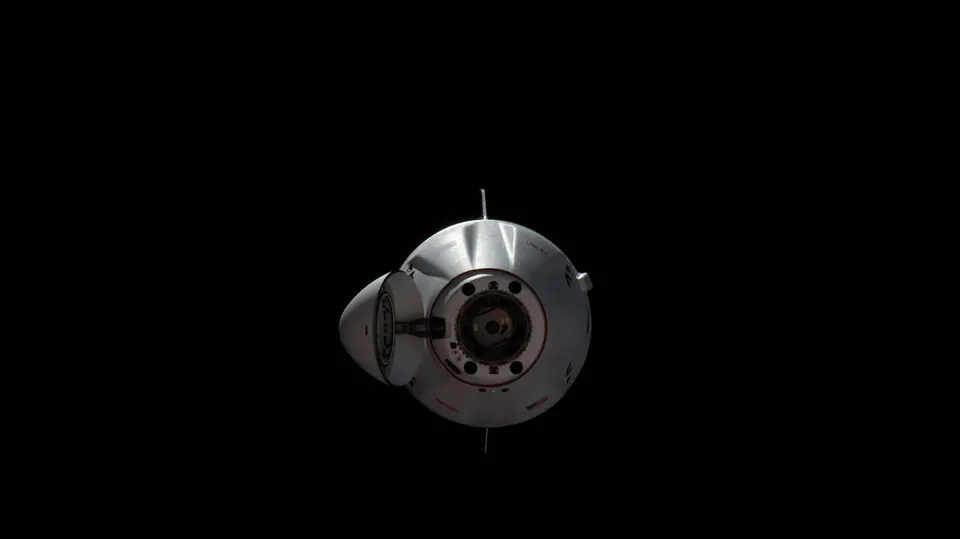
The uncrewed capsule brought home bioprinted blood vessel tissue, treated tumor organoids, bacteria samples and a lighting system that spent more than three years on the station.
 Related image · NASA/GSFC/Solar Dynamics Observatory
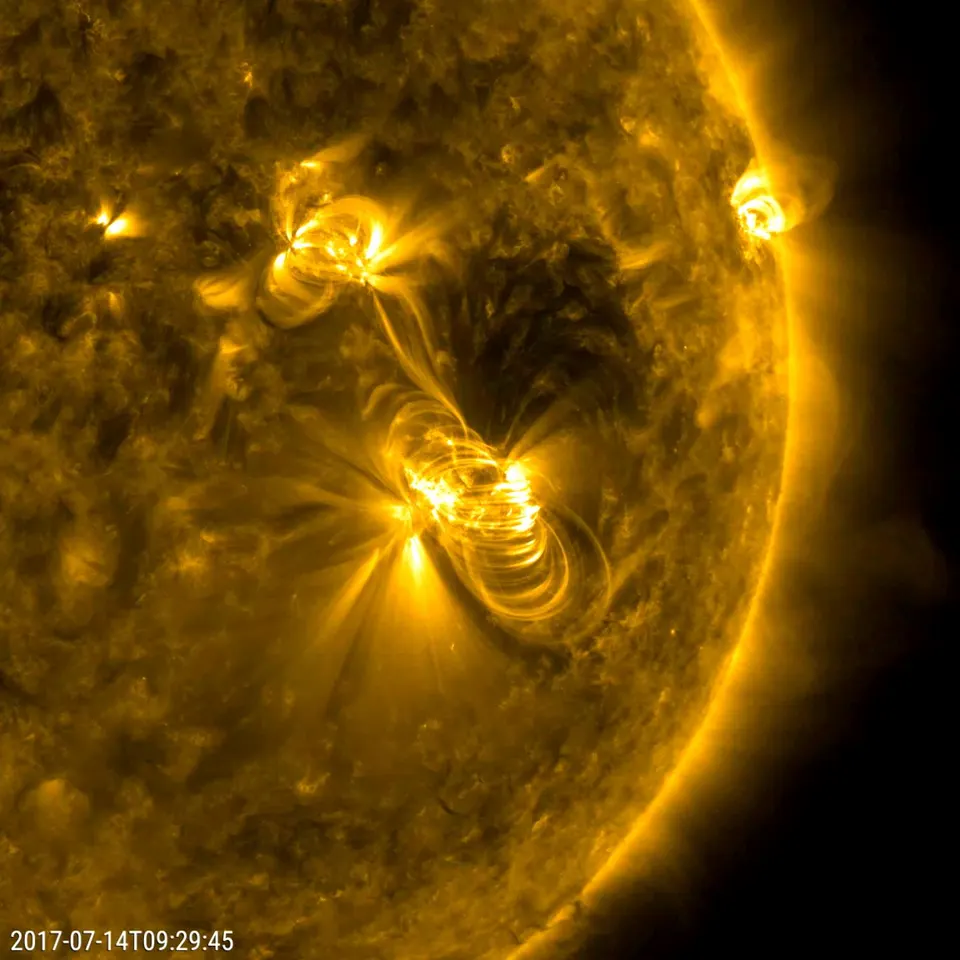
In the model, each coronal mass ejection moved faster than the one before it, catching up and joining its predecessor as their magnetic fields reconnected.
 Related image · ESO/L. Calçada / Wikimedia Commons
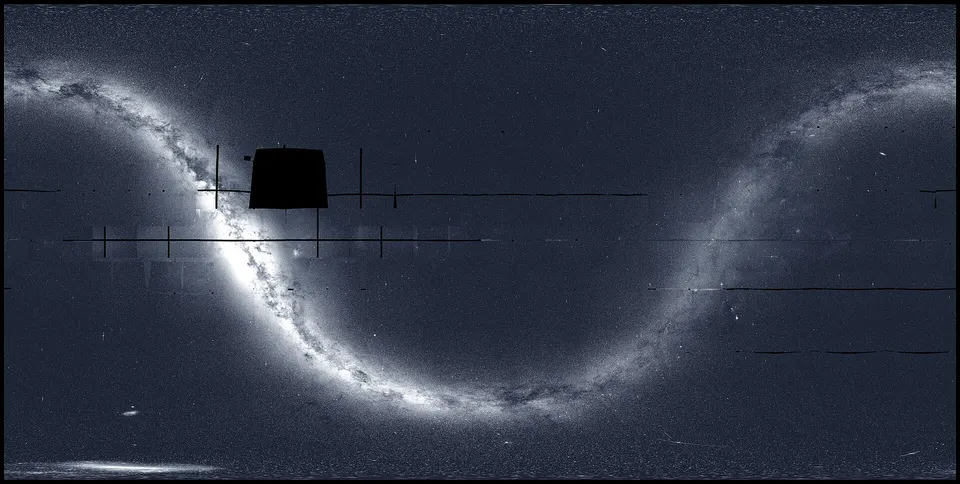
The new release is nearly three times the size of earlier editions. For some stars, it draws on close to 28 years of observations of the galaxy's bulge and disk.
 Related image · B. Saxton, NRAO/AUI/NSF / Wikimedia Commons
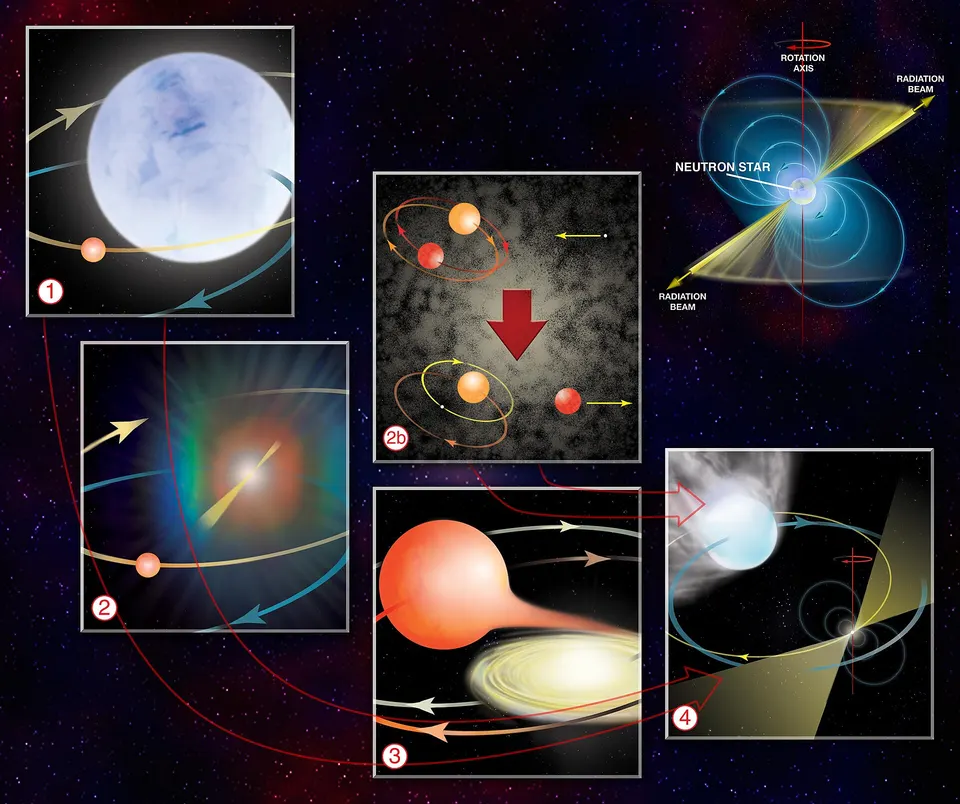
A new preprint uses a millisecond pulsar orbiting a candidate black hole to set limits on so-called cosmological coupling. For now, the limits are loose.
 Related image · NASA/GSFC
A preprint finds that a chemically intermediate group of stars could have formed in gas linking our galaxy to Gaia-Sausage-Enceladus as the two galaxies merged.
 Related image · NASA's Scientific Visualization Studio - University of Maryland College… / Wikimedia Commons
A preprint analysis of seven candidates around five stars also reports orbital period ratios for TOI-2392, a system with three planets.