Key points
- During the Medieval Warm Period, about 1000–1300 CE, western North Pacific tropical cyclones shifted poleward.
- In the same period, North Atlantic tropical cyclones shifted toward the equator.
- The researchers attribute the split to the contrasting ways ocean surface temperatures influenced each basin.
- In recent decades, storms in both basins have shifted poleward together, which the authors suggest reflects human-caused forcing.
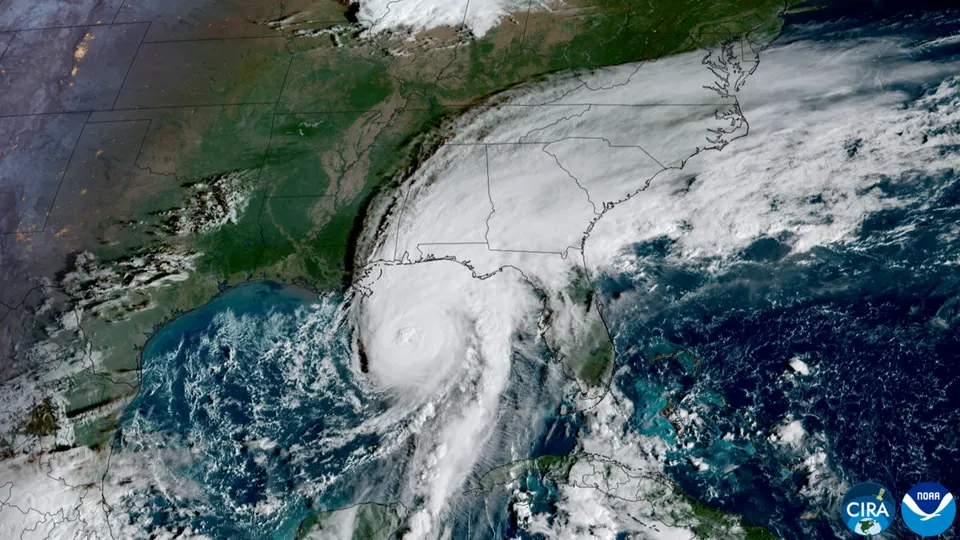
Roughly a thousand years ago, during a warm stretch driven mostly by natural factors, tropical cyclones in two major storm regions drifted in opposite directions. The finding comes from a study published in Nature Communications. Using paleoclimate evidence, the researchers report that storms in the western North Pacific moved toward the pole during the Medieval Warm Period, about 1000–1300 CE. Over the same centuries, North Atlantic storms moved toward the equator.
To build this picture, the team produced a new record of past storms from the western North Pacific. They then combined it with records from earlier studies to reconstruct storm migration across both ocean basins. The researchers trace the contrast to the different ways sea surface temperatures influenced each basin. The authors say this split indicates that the climate system's own internal variability can send storms in opposite directions in different basins when the climate is close to a steady state, which scientists call quasi-equilibrium.
Recent decades look different. Storms in both basins have moved poleward at the same time. Scientists have not yet settled whether this modern migration comes from human-caused warming or natural variability. The authors suggest that the shared shift reflects human-caused forcing that is increasingly overwhelming natural feedbacks specific to each region.
The team presents the reconstruction as a new benchmark for working out the causes of observed storm migration and narrowing projections of future cyclone risk. The journal released the accepted, peer-reviewed paper early, and it may still be edited before the final version appears.
Why it matters
The authors say their reconstruction offers a benchmark for working out what is driving today's storm migration and for narrowing projections of future tropical cyclone risk.
What we don't know yet
The link between today's poleward shift and human-caused forcing is the authors' suggestion, not a demonstrated result. The paper is an early-release version that may still be edited.
Terms in this story
- Tropical cyclone
- A rotating storm system that forms over warm tropical oceans, known regionally as a hurricane or typhoon.
- Medieval Warm Period
- A span of roughly 1000–1300 CE when climate was relatively warm and was shaped mainly by natural factors.
- Internal variability
- Natural fluctuations that arise within the climate system itself, without outside pushes such as human emissions.
Sources and verification
DexScience articles are produced with AI assistance and an automated fact-check against the linked sources. Spotted an error? Tell us and we will correct it openly.