Key points
- Researchers used APOGEE DR17 chemical data to study Eos, low-alpha stars that formed inside the Milky Way but follow eccentric, non-rotating orbits.
- In metal-poor Eos stars, nitrogen varies up to 1.7 times as much as in low-alpha disk stars of the same metallicity.
- Eos stars are younger than the high-alpha disk and the Splash but older than most of the low-alpha disk.
- The study is a preprint on arXiv and has not yet been peer-reviewed.
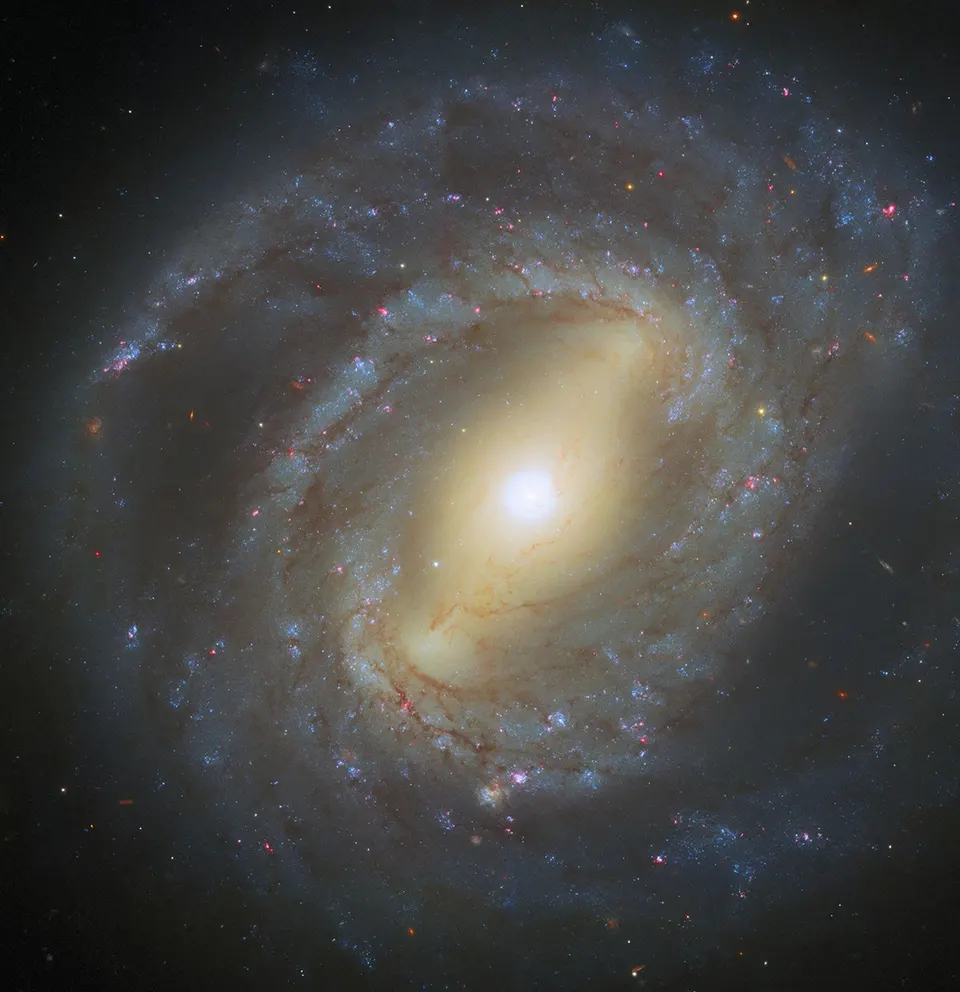
Some stars in the Milky Way's halo move on stretched, non-rotating orbits, and a group of them may hold a record of the galaxy's last significant merger. A study posted to arXiv suggests these stars were born in a burst of star formation that the collision set off. The authors call the population Eos and studied it using chemical measurements from the APOGEE DR17 survey. Their work has not yet been peer-reviewed.
Astronomers think the merger with a smaller galaxy, called Gaia-Sausage-Enceladus (GS/E), reshaped the young Milky Way and marked the shift from its high-alpha disk to its low-alpha disk. Eos stars are low-alpha and formed within our galaxy. In the more metal-poor Eos stars, nitrogen levels vary up to 1.7 times as much as they do in low-alpha disk stars of the same metallicity. Being knocked onto wilder orbits cannot explain this on its own. The Splash, a group of disk stars that the same merger heated onto halo orbits, shows no such extra spread. The team concludes that these Eos stars formed from poorly mixed gas.
The chemistry of Eos falls between the debris left by GS/E and Milky Way stars that formed at the same time. The more a star's composition resembles GS/E, the wider its orbit tends to be. Eos stars are younger than the high-alpha disk and the Splash, and older than most of the low-alpha disk.
The researchers compared their findings with a computer model of galaxy formation from the Auriga project. In that simulation, a similar merger channels gas stripped from the smaller galaxy into a zone where it mixes with the larger galaxy's gas, and the stars that form there match the patterns seen in Eos. The authors interpret Eos as the surviving relic of a starburst triggered by the GS/E merger, born largely from partially mixed gas linking the two galaxies at the start of the low-alpha disk.
Why it matters
According to the authors, Eos lets astronomers see, in actual stars, how the Milky Way's last significant merger shaped the birth of new stars and the growth of the galaxy.
What we don't know yet
The study is a preprint that has not been peer-reviewed. Its account of how Eos formed is an interpretation based on how closely the observations match a single simulation.
Terms in this story
- Alpha elements
- Elements such as oxygen and magnesium, made mostly in massive stars, whose abundance helps astronomers tell apart stellar populations formed at different times.
- Metallicity
- The proportion of a star's material made up of elements heavier than hydrogen and helium.
- In situ
- Formed within the Milky Way itself rather than brought in from another galaxy.
Sources and verification
DexScience articles are produced with AI assistance and an automated fact-check against the linked sources. Spotted an error? Tell us and we will correct it openly.