Key points
- The uncrewed Dragon landed in the Pacific Ocean near Los Angeles at 2:03 p.m. PST, according to NASA.
- It ended the 35th commercial resupply services mission SpaceX has flown to the space station for NASA.
- Returning research includes a 3D-bioprinted blood vessel construct and frozen tumor organoids treated aboard the station.
- A lighting system tested for supporting astronauts' sleep and well-being returned after more than three years on the station.
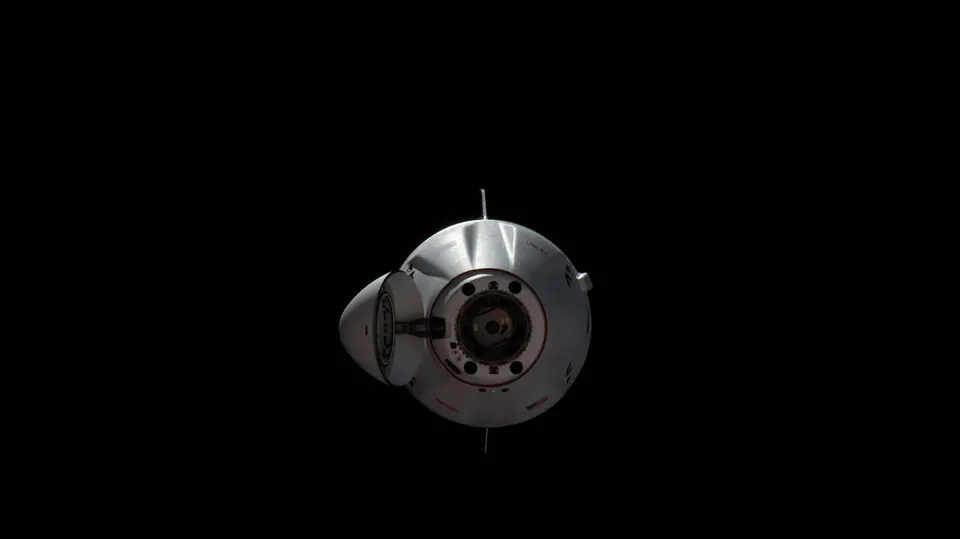
SpaceX's uncrewed Dragon cargo capsule landed in the Pacific Ocean near Los Angeles at 2:03 p.m. PST, according to NASA. The landing ended the 35th commercial resupply services mission SpaceX has flown to the International Space Station for the agency. The capsule came home carrying experiments that NASA says could help shape future space exploration and benefit people on Earth.
One of the returning experiments is a 3D-bioprinted blood vessel construct, a tissue structure built up layer by layer from living cells, which researchers used to investigate cardiovascular disease and how blood vessels age, both in orbit and on the ground. Frozen tumor organoids, tiny clusters of cancer cells that mimic tumors, were treated on the station and may point toward better cancer therapies and more personalized medicine.
Scientists will also study frozen microbial samples to see how bacteria that resist antibiotics manage to survive, adapt and change in orbit. A lighting system came back too, after more than three years on the station. There, researchers tested its potential to support astronauts' sleep and well-being on long-duration missions.
Dragon undocked from the station at 11:05 a.m. CST on Nov. 20. It had arrived Oct. 15, two days after lifting off on a Falcon 9 rocket from Space Launch Complex 40 at Cape Canaveral Space Force Station in Florida. On the trip up, it delivered more than 6,300 pounds of supplies and research for the Expedition 75 crew.
Why it matters
According to NASA, the samples Dragon brought home could inform future space exploration and help people on Earth, including research on heart disease, cancer treatment and antibiotic-resistant bacteria.
What we don't know yet
The returned samples still have to be analyzed. NASA describes their possible benefits only as things they could or may offer, not as results.
Terms in this story
- Organoid
- A tiny, simplified three-dimensional cluster of cells grown outside the body to mimic a real tissue or tumor.
- 3D bioprinting
- A technique that builds living tissue structures layer by layer using printers loaded with cells.
- Commercial resupply mission
- A cargo flight run by a private company under contract with NASA to deliver supplies and experiments to the space station.
Sources and verification
DexScience articles are produced with AI assistance and an automated fact-check against the linked sources. Spotted an error? Tell us and we will correct it openly.