Key points
- Progress 97 launched from Kazakhstan at 5:17 a.m. EST, carrying about three tons of food, fuel and supplies.
- It is scheduled to dock automatically to the Rassvet module at 7:11 a.m. on Thanksgiving Day.
- Northrop Grumman's Cygnus XL could launch as early as Sunday, Nov. 29, with liftoff targeted for 10:47 a.m.
- Cygnus XL holds some 11,000 pounds of experiments and laboratory equipment.
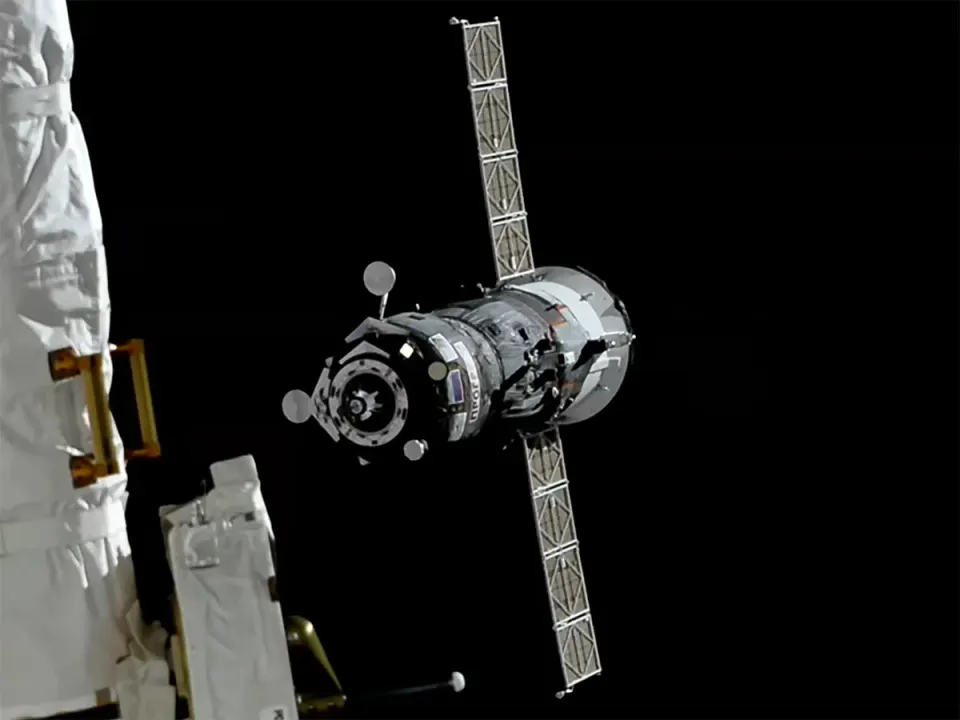
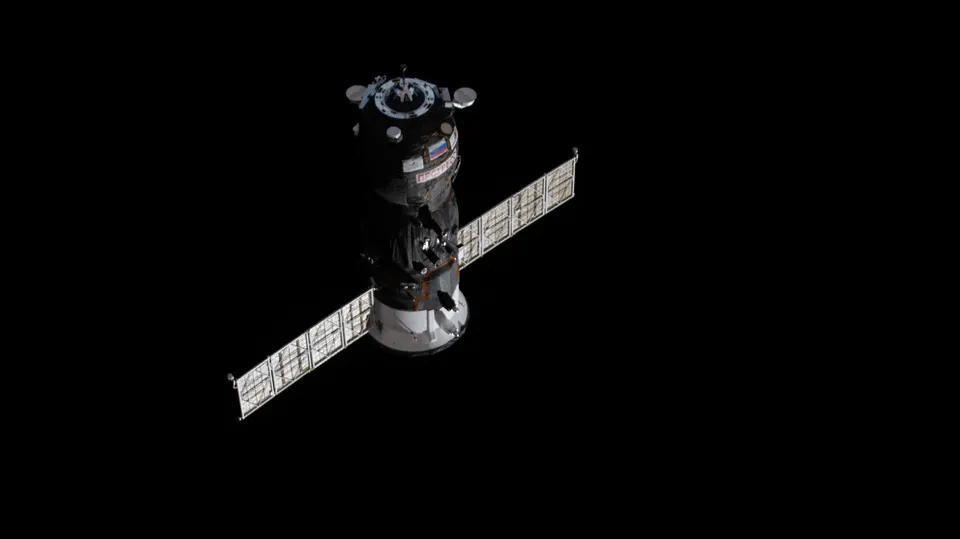
Roscosmos launched its Progress 97 cargo spacecraft from Kazakhstan at 5:17 a.m. EST on Tuesday, according to NASA. The spacecraft is carrying about three tons of food, fuel and supplies to the International Space Station. It is scheduled to dock on its own with the station's Rassvet module at 7:11 a.m. on Thanksgiving Day, restocking the seven-member Expedition 75 crew.
Another delivery will follow shortly. Northrop Grumman's Cygnus XL is set to ride a SpaceX Falcon 9 rocket out of Florida's Cape Canaveral Space Force Station, with Sunday, Nov. 29, the earliest possible date and 10:47 a.m. the target time. NASA says this will be the final cargo mission of the year. The spacecraft holds some 11,000 pounds of experiments and laboratory equipment, including studies of cancer cell movement, engineered muscle tissues and DNA-inspired particles.
NASA flight engineers Jessica Watkins and Luke Delaney plan to capture Cygnus XL with the Canadarm2 robotic arm on Tuesday, Dec. 1. Ground controllers will then steer the arm remotely to attach the spacecraft to the Earth-facing port of the Unity module. On Tuesday the pair practiced capture techniques and took turns scanning each other's internal organs with the EchoFinder-2 ultrasound device as doctors on the ground watched live, aided by augmented reality tools and artificial intelligence.
Elsewhere, Anil Menon of NASA and Joshua Kutryk of CSA maintained exercise equipment. In the Roscosmos segment, Pyotr Dubrov and Sergey Teteryatnikov, both cosmonauts, sampled the station's air to check for bacteria and mold. Anna Kikina collected hair and saliva samples for research on how spaceflight affects the immune and nervous systems. For a long-running Roscosmos investigation, she also completed a timed memory test and wore a monitor tracking her heart activity.
Why it matters
According to NASA, these back-to-back deliveries supply the Expedition 75 crew and bring new research aimed at promoting human health on Earth and in space.
What we don't know yet
The Cygnus XL launch is targeted for no earlier than Nov. 29, so its schedule could change.
Terms in this story
- Progress
- An uncrewed Russian spacecraft that carries cargo such as food, fuel and supplies to the International Space Station.
- Canadarm2
- The space station's large robotic arm, which can grab arriving spacecraft and move them into place for attachment.
Sources and verification
DexScience articles are produced with AI assistance and an automated fact-check against the linked sources. Spotted an error? Tell us and we will correct it openly.