Key points
- The study examined hemagglutinin variants E190D and Q226H from the human H5N1 isolate A/British Columbia/PHL-2032/2024.
- The work combined structural and functional characterization and appears in the journal Communications Biology.
- X-ray diffraction data were collected at Stanford Synchrotron Radiation Lightsource beamlines 12-1 and 12-2.
- The team also had H5 hemagglutinins analyzed with an O-glycan array at the TSRI Genomics Core facility.
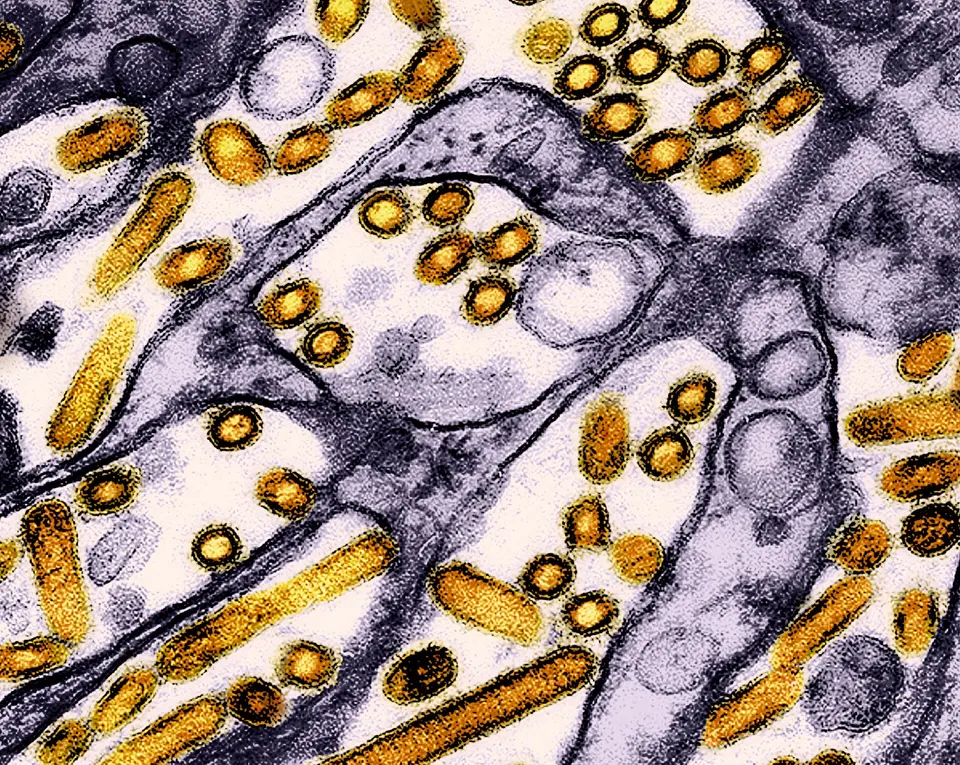
A research team has published a structural and functional study of two minor variants of hemagglutinin, the surface protein that influenza viruses use to latch onto host cells, taken from a human H5N1 avian influenza isolate designated A/British Columbia/PHL-2032/2024. The variants are known by the shorthand E190D and Q226H, labels that identify single amino acid substitutions at specific positions in the protein. The work appears in the peer-reviewed journal Communications Biology.
The methods named in the available material point to a structural biology approach. X-ray diffraction datasets were collected at the Stanford Synchrotron Radiation Lightsource at SLAC National Accelerator Laboratory, on beamlines 12-1 and 12-2, and the project also drew on resources at the National Synchrotron Light Source II, operated for the U.S. Department of Energy by Brookhaven National Laboratory. Synchrotrons produce intense X-ray beams that let researchers map the shape of a protein down to the level of individual atoms.
Beyond the crystallography, the researchers credit the TSRI Genomics Core facility with analyzing H5 hemagglutinins using an O-glycan array, a laboratory tool that tests which sugar molecules a protein will stick to. Automated robotic crystal screening was set up at The Scripps Research Institute. The authors note that the contents of the publication are their own responsibility and do not necessarily represent the official views of the National Institute of General Medical Sciences or the National Institutes of Health.
DexScience was supplied only the title and acknowledgements of this paper rather than its results. We are therefore not reporting what the two variants were found to do, including any conclusions about receptor binding or human adaptation. Those details are in the full paper.
Why it matters
Hemagglutinin is the influenza protein that determines which cells a virus can attach to, so mapping the effects of individual substitutions in H5N1 viruses isolated from people is a standard input to surveillance.
What we don't know yet
The source material available to us contained only the paper's title and acknowledgements section. It did not include the abstract, results or discussion, so the study's actual findings, their strength and any limitations the authors state are not reflected here. Readers should consult the full paper in Communications Biology.
Terms in this story
- Hemagglutinin
- A protein on the surface of influenza viruses that binds to molecules on host cells, allowing the virus to attach.
- Synchrotron
- A large facility that generates very bright X-ray beams, used to determine the atomic structure of crystallized proteins.
- Glycan array
- A laboratory plate carrying many different sugar molecules, used to test which ones a protein binds.
Sources and verification
DexScience articles are produced with AI assistance and an automated fact-check against the linked sources. Spotted an error? Tell us and we will correct it openly.