Key points
- The study appeared in the peer-reviewed journal Natural Hazards and Earth System Sciences, published November 19, 2026.
- It models two kinds of signals, seismic waves and tsunami waves, from regional earthquakes.
- The modeling work is aimed at a subsea cable called the TamTam SMART cable.
- The paper's title describes the work as a modeling study.
Researchers have used modeling to study the signals that regional earthquakes produce for a seafloor cable called the TamTam SMART cable. Their paper appeared on November 19, 2026, in the peer-reviewed journal Natural Hazards and Earth System Sciences, which is published by EGU and Copernicus Publications. It covers two kinds of signals: seismic waves that travel through the ground and tsunami waves that move across the ocean.
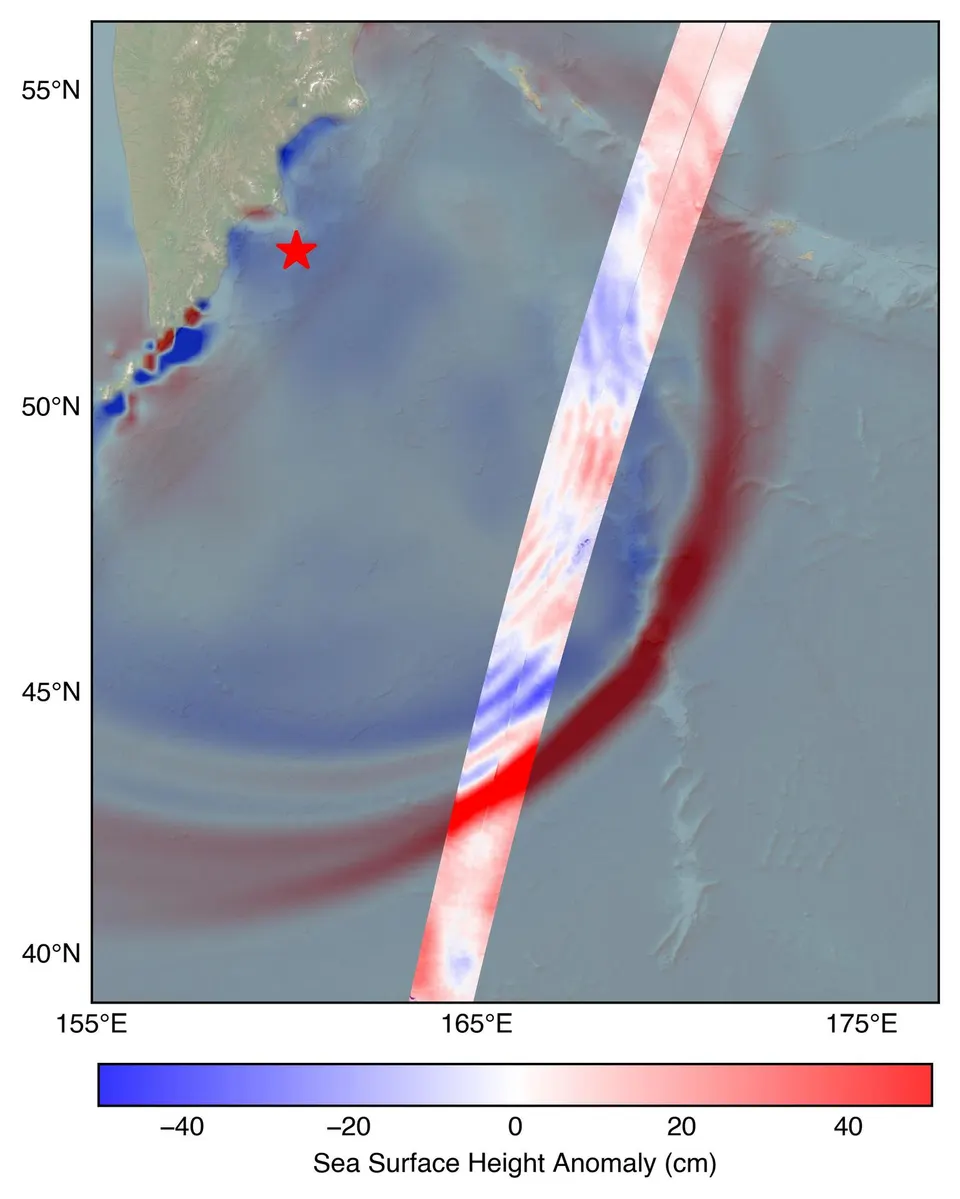
When an undersea earthquake suddenly moves the seafloor, it can shake the ground within seconds and also lift the water above it into a tsunami that crosses the ocean much more slowly. In principle, instruments on the seafloor can detect both.
The paper's title describes it as a modeling study of the waveforms that regional earthquakes produce for the cable. A waveform is the shape of a signal as it changes over time. The material available to DexScience does not say whether the cable has recorded any data or whether the paper compares its models with real observations.
DexScience had only the paper's title, publication details and reference list to work from. This brief therefore does not cover which earthquakes were modeled, how large the modeled waves were or what the authors concluded. Those details are in the full paper.
Why it matters
The study models seismic and tsunami signals from regional earthquakes for one specific subsea cable. That kind of work helps show what signals such a cable might carry.
What we don't know yet
The paper's title describes it as a modeling study. The material available here does not say whether the cable is installed or whether the paper uses any real recordings, and it did not include the paper's methods, specific scenarios or conclusions.
Terms in this story
- Waveform
- The shape of a signal, such as ground motion or water height, as it changes over time.
- Tsunami
- A series of ocean waves set off when a large volume of water is suddenly moved, for example by an undersea earthquake.
- Seismic waves
- Vibrations that spread through the Earth from the source of an earthquake.
Sources and verification
DexScience articles are produced with AI assistance and an automated fact-check against the linked sources. Spotted an error? Tell us and we will correct it openly.