Key points
- The team inspected 710 rooms at 23 schools in central Nepal and sorted each into one of four seismic risk categories.
- Of those rooms, 35 % rated low risk, 35 % medium, 17 % high and 13 % very high.
- Buildings put up after the 2015 Gorkha earthquake were generally less vulnerable than older ones.
- The 2015 Mw 7.9 Gorkha earthquake damaged about 9000 school buildings and about 35 000 classrooms.
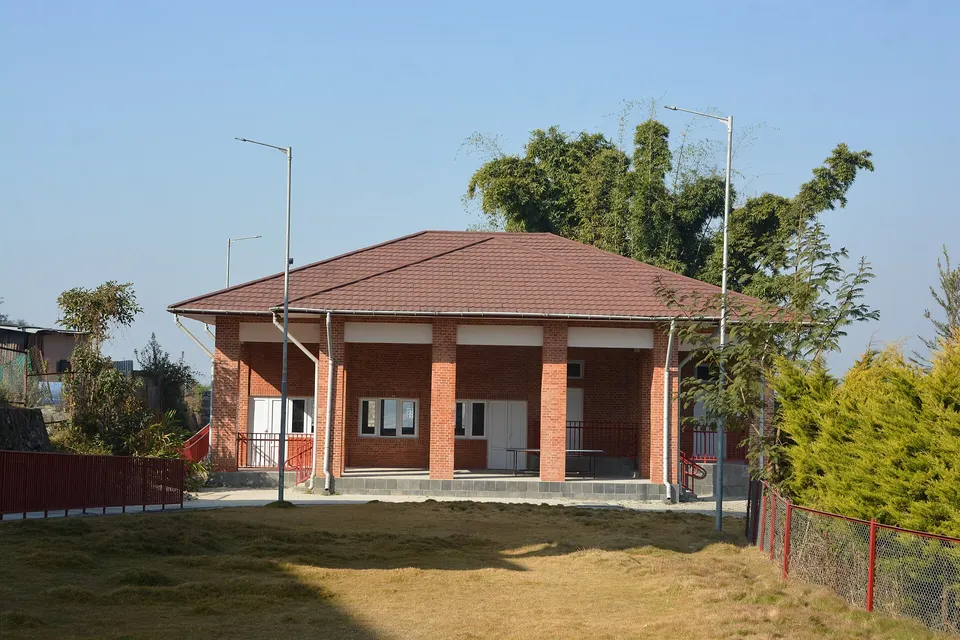
A survey of 23 schools in central Nepal found that 17 % of the 710 rooms inspected fall into a high seismic risk category and another 13 % into a very high one. Shiba Subedi and colleagues report the results in Natural Hazards and Earth System Sciences. They also propose low-cost steps schools can take to protect students.
Nepal sits where the Indian and Eurasian tectonic plates collide, and the country remains highly exposed to large earthquakes. The 2015 Gorkha earthquake, which had a moment magnitude (Mw) of 7.9, damaged about 9000 school buildings and about 35 000 classrooms. Since 2018, the Seismology at School in Nepal (SASIN) program has run earthquake education and outreach in schools.
To rate the rooms, the researchers used information from school officials, qualitative assessments, systematic visual inspections and an evacuation guide adapted to local conditions. They rated 35 % of rooms low risk and 35 % medium risk. Buildings constructed after the 2015 earthquake generally came out less vulnerable. Most of the riskier rooms were in older buildings or in buildings that did not follow the National Building Code.
The authors also warn that standard earthquake advice doesn't suit every building. Dropping to the floor and taking cover under furniture works in well-engineered buildings. But in Nepal many buildings are not properly engineered, and there the researchers say people should leave for the nearest open space instead. They recommend similar assessments for every school in Nepal and across the Himalayan region.
Why it matters
The authors say their framework can help schools decide which buildings to fix first and choose cheap ways to reduce risk in a country that remains highly exposed to large earthquakes.
What we don't know yet
The assessment covered 23 schools in central Nepal and relied on visual inspections and qualitative assessments. The authors recommend extending this kind of assessment to all schools in Nepal and the wider Himalayan region.
Terms in this story
- Moment magnitude (Mw)
- A scale that measures an earthquake's size from its seismic moment, which depends on how large an area of the fault slipped, how far it slipped and how stiff the rock is.
- Seismic risk
- The likelihood that people or buildings will be harmed when an earthquake shakes the ground.
Sources and verification
DexScience articles are produced with AI assistance and an automated fact-check against the linked sources. Spotted an error? Tell us and we will correct it openly.