Key points
- PRIISM is an open-source imaging tool that researchers in Japan built for ALMA radio data.
- In 43 disks in the Taurus region, researchers found 24 rings and gaps, and half were first detected with PRIISM.
- A study of 78 disks in Ophiuchus found these structures can appear a few hundred thousand years after a star's birth.
- A new function, PRIISM-selfcal, calibrates and builds images in a single step.
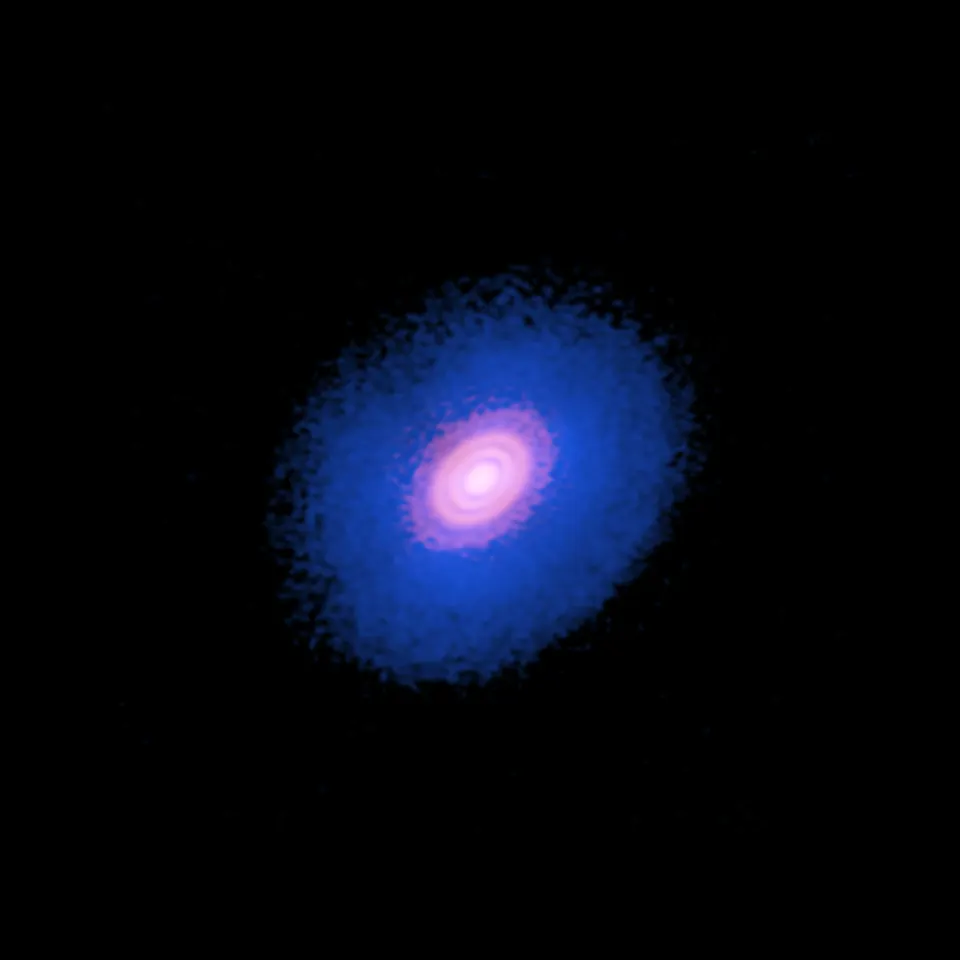
An imaging tool built by researchers in Japan is pulling finer detail out of existing observations from the ALMA radio telescope array, according to the observatory. The free, open-source software, called PRIISM, has revealed previously unseen rings and gaps in protoplanetary disks. These are the dusty, gas-rich disks around young stars where planets take shape. All of the new results come from archival data, so no new telescope time was needed.
ALMA links many antennas so they work as one large radio telescope. Its measurements capture only part of the information needed to map a source, so astronomers have to reconstruct the images. The long-standing CLEAN method has been used for roughly 50 years. Its last step smooths the image, which can wash out small features. PRIISM instead uses sparse modeling, a statistical approach that looks for the simplest, smoothly varying image that still agrees with the data. It also tunes its own adjustable settings, so the results don't depend on who runs the analysis.
In 43 disks in the Taurus star-forming region, researchers counted 24 rings and gaps, and half had never been detected before PRIISM. The widths and depths of the gaps match models in which growing planets carve them out. A second study of 78 disks in Ophiuchus found that these structures may form as early as a few hundred thousand years after a star is born.
PRIISM works with ALMA's standard analysis software. A newly released feature, PRIISM-selfcal, handles calibration and imaging together. The developers are working to extend the tool to three-dimensional data that track moving molecular gas, and to other targets such as galaxies.
Why it matters
Rings and gaps in disks around young stars are considered clues to how planets form. Running new analysis methods on ALMA's large archive is expected to increase how much science the observatory produces.
What we don't know yet
The link between the gaps and planets rests on models in which planets carve them. The gap measurements match those models but do not show planets directly. Versions of PRIISM for three-dimensional gas data and for galaxies are still in development.
Terms in this story
- Protoplanetary disk
- A disk of gas and dust around a young star, where planets form.
- Sparse modeling
- A statistical method that rebuilds an image by choosing the simplest picture that still fits the measured data.
- CLEAN
- A standard method radio astronomers use to turn interferometer measurements into images.
Sources and verification
DexScience articles are produced with AI assistance and an automated fact-check against the linked sources. Spotted an error? Tell us and we will correct it openly.