Key points
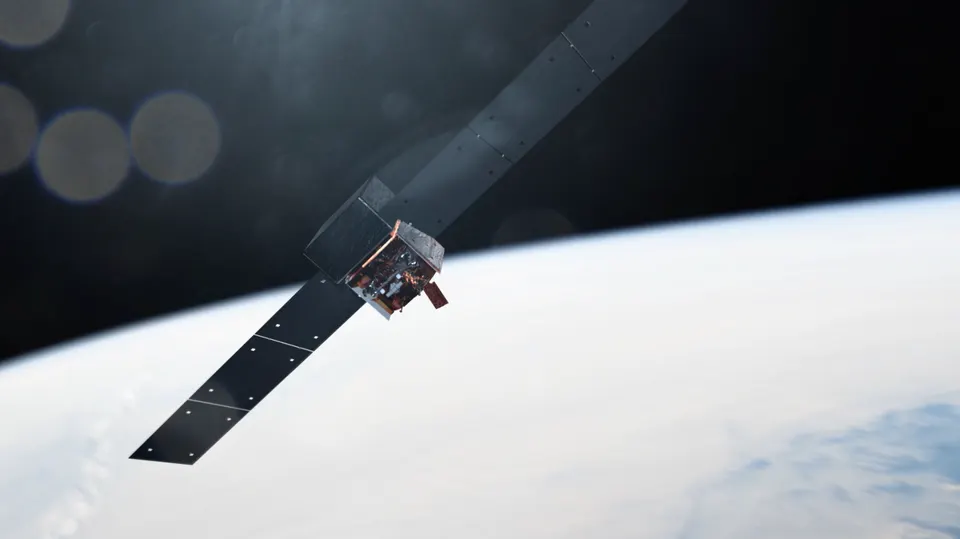
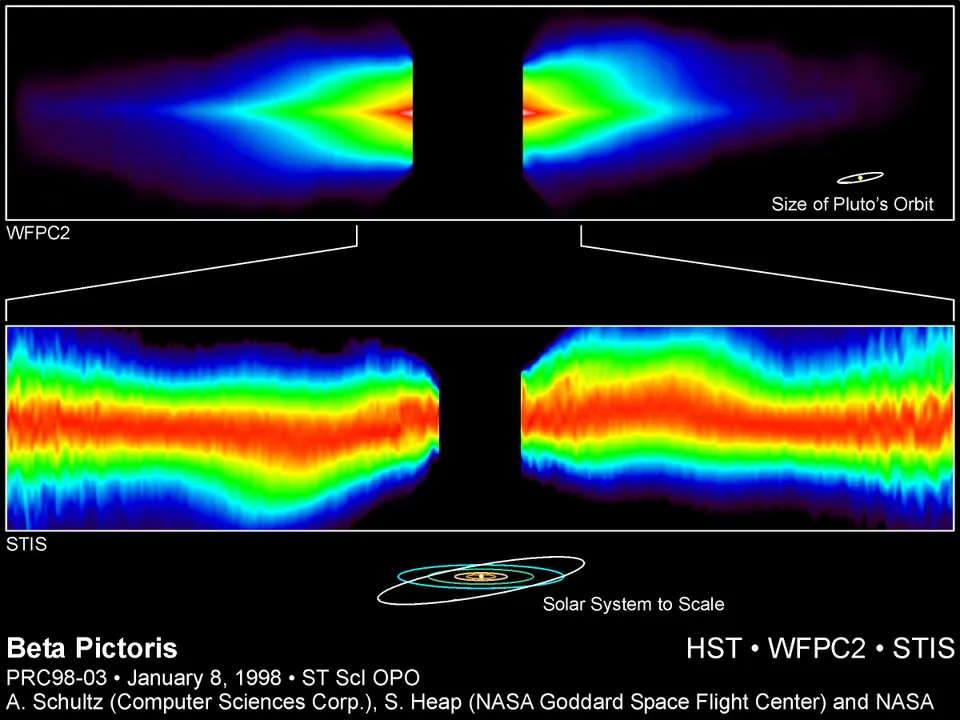
- The James Webb Space Telescope observed the β Pictoris debris disk in near-infrared light.
- The water ice is amorphous, with less than 7% crystallinity.
- Carbon dioxide ice appears as both 12CO2 and 13CO2, mixed with water ice at about 1:10.
- The researchers say frequent collisions are needed to explain the even spread of icy dust grains.
Astronomers using the James Webb Space Telescope have detected frozen carbon dioxide and water in the dusty disk around the star β Pictoris, where planets are still forming. The team reports in Science that the way the ices are mixed implies they formed under cold conditions, likely in the interstellar medium, the thin gas and dust between stars.
The outer part of the disk lies far enough from the star that volatile molecules, which turn to gas easily, should freeze into solid ice. The team captured a near-infrared spectrum of the disk, and its features revealed water ice. The ice is amorphous, meaning its molecules are disordered rather than arranged in a crystal, with crystallinity below 7%. The spectrum also showed carbon dioxide ice in two isotopologues, 12CO2 and 13CO2. These are versions of the molecule that contain different forms of carbon.
From the data, the researchers infer that the carbon dioxide is closely blended into the water ice at a ratio of 1:10. They say this mixture implies the ices formed in cold surroundings, likely in the interstellar medium.
The icy dust grains also appear evenly distributed across the disk. According to the team, that pattern requires the disk's material to collide often.
Why it matters
The ices sit in a disk where planets are forming. Their makeup suggests the material formed under cold conditions, likely in interstellar space.
What we don't know yet
The researchers say the ices likely formed in the interstellar medium. That origin is an inference from the ice mixture, not something the telescope observed directly.
Terms in this story
- Debris disk
- A ring of dust and solid material orbiting a star.
- Amorphous ice
- Ice whose molecules are jumbled instead of locked into a regular crystal pattern.
- Isotopologue
- A version of a molecule in which one or more atoms is a different isotope of the same element.
Sources and verification
DexScience articles are produced with AI assistance and an automated fact-check against the linked sources. Spotted an error? Tell us and we will correct it openly.