Key points
- JWST's MIRI and NIRCam imaged about 2 kiloparsecs on each side of NGC 253 along its minor axis.
- PAH-bright filaments trace the edges of the outflow cones out to at least about 0.5 kiloparsecs.
- PAH glow fades faster than r^-2 in two streamers, possibly from molecule destruction or falling gas column density or dust-to-gas ratio.
- The work is a preprint posted to arXiv and has not yet been peer-reviewed.
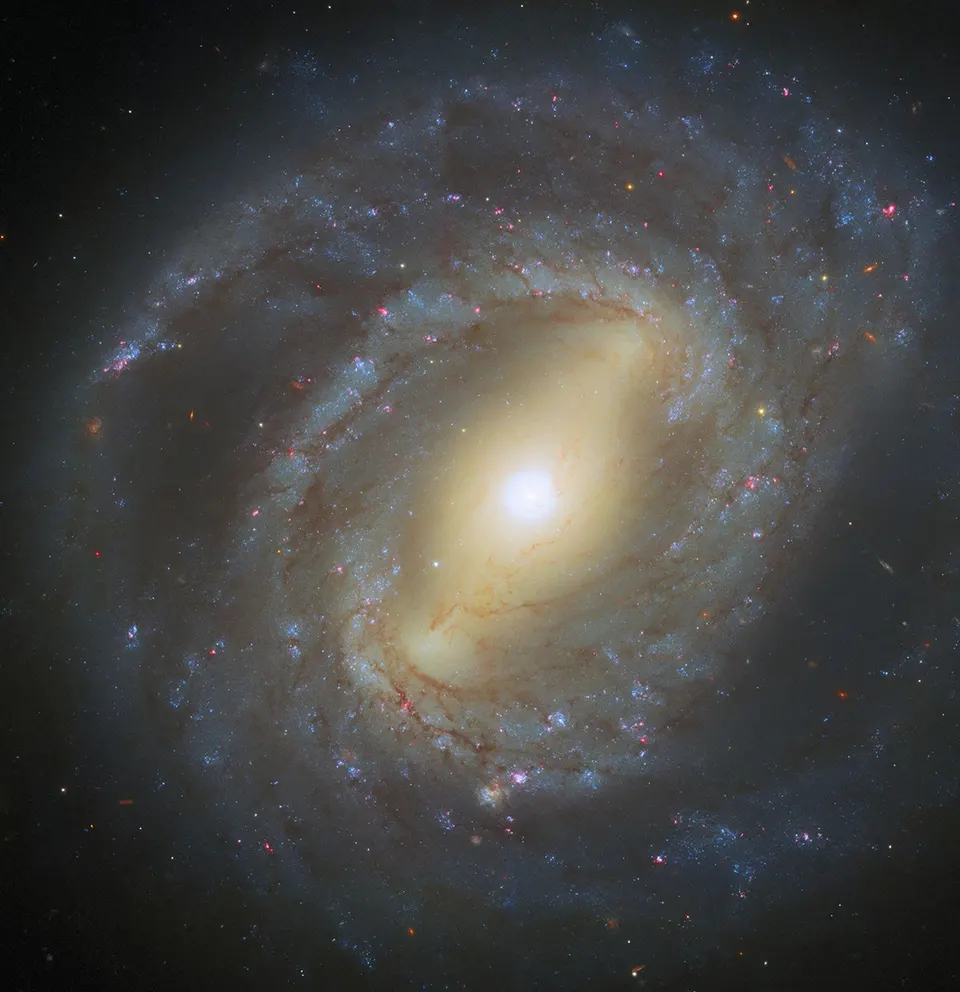
Astronomers have used the James Webb Space Telescope to follow carbon-rich molecules as they travel outward in a powerful wind blowing from the nearby galaxy NGC 253, according to a preprint posted to arXiv. The team calls it the first spatially resolved study of how these molecules evolve within the galaxy's superwind. The paper has not yet been peer-reviewed.
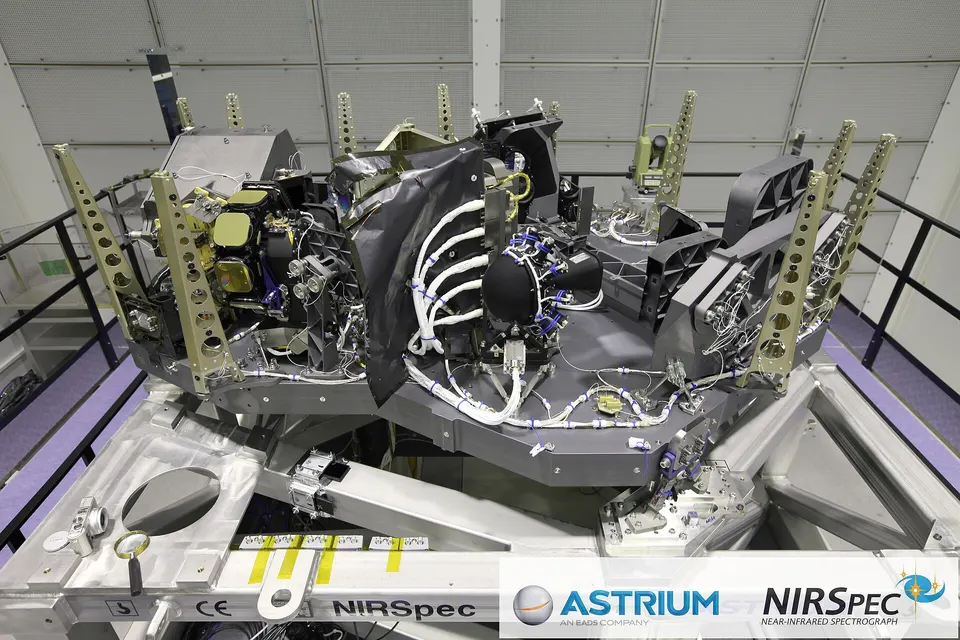
The molecules are polycyclic aromatic hydrocarbons, or PAHs. These soot-like compounds glow at characteristic infrared wavelengths. NGC 253 lies roughly 3.5 megaparsecs away, and an intense burst of star formation near its center drives gas out of the galaxy. With JWST's MIRI and NIRCam instruments, the researchers imaged about 2 kiloparsecs on both sides of the galaxy along its minor axis. Their images resolve details between about 0.85 and 6.4 parsecs across. They tracked PAH light at 3.3, 7.7 and 11.3 micrometers and found bright, threadlike streamers lining the edges of the cone-shaped outflow. These streamers reach at least about 0.5 kiloparsecs from the center.
In the southwest and northeast streamers, PAH brightness dropped off with distance more steeply than r^-2. According to the researchers, weaker starlight by itself would not explain that steep a drop. Instead, the molecules may be getting destroyed, or there may be a falling gas column density (the total amount of gas along the line of sight) or a lower dust-to-gas ratio. Comparing brightness at different wavelengths suggests that PAHs sit larger and more neutral the farther they are from the starburst.
The team also compared NGC 253 with the well-studied starburst galaxy M82. In NGC 253, the PAH sizes appear to change faster. The authors suggest that NGC 253's wind may be at an earlier stage of development, in which small PAHs are wiped out near the starburst within the first few million years.
Why it matters
The study gives a detailed view of how a starburst-driven wind may reshape dust molecules as it pushes them out. That offers a way to compare galactic outflows that appear to be at different stages, such as NGC 253 and M82.
What we don't know yet
This is a preprint that has not been peer-reviewed. The researchers could not tell whether the steep fading of PAH light comes from molecule destruction or from a falling gas column density (the total amount of gas along the line of sight) or dust-to-gas ratio. Beyond about 0.5 kiloparsecs, the streamers likely blend with the galaxy's spiral arms.
Terms in this story
- Polycyclic aromatic hydrocarbons (PAHs)
- Large carbon-based molecules, similar to soot, that give off light at specific infrared wavelengths.
- Superwind
- A large-scale outflow of gas driven out of a galaxy by intense star formation.
- Starburst
- A region or galaxy forming stars much faster than usual.
Sources and verification
DexScience articles are produced with AI assistance and an automated fact-check against the linked sources. Spotted an error? Tell us and we will correct it openly.