Key points
- Researchers measured high-precision selenium isotopes in garnet pyroxenites derived from recycled crust.
- The pyroxenite values fall between the primitive mantle and the isotopically lighter mid-ocean ridge basalts.
- A two-stage thermodynamic model traced eclogite-derived melts reacting with the convecting mantle.
- The study appears in Science Advances, Volume 12, Issue 48.
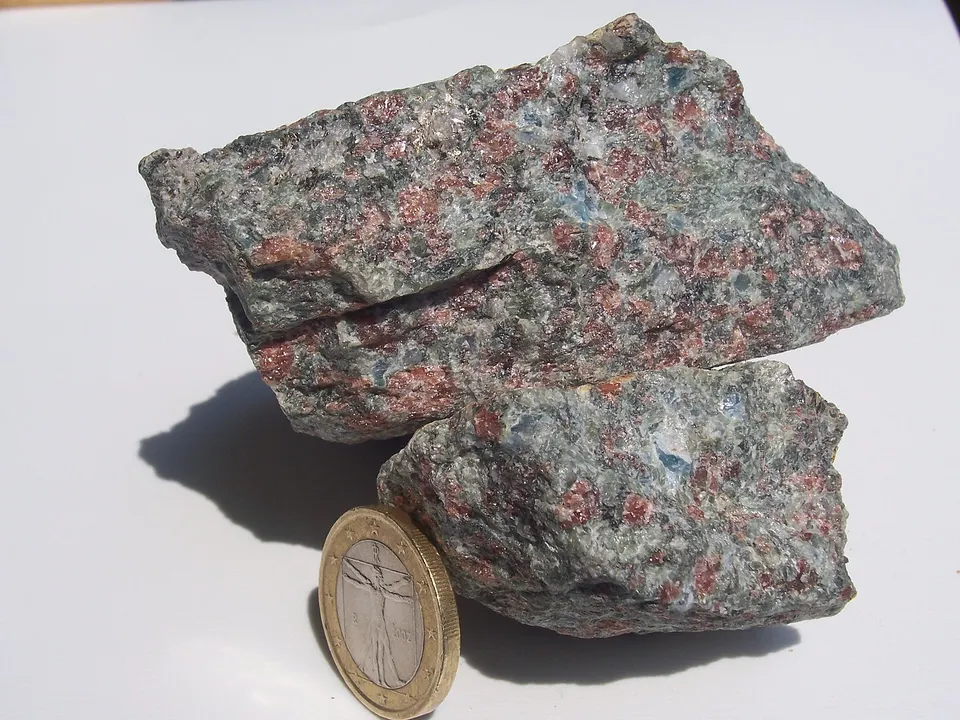
For billions of years, subduction has carried slabs of ocean crust down into Earth's interior. Scientists still know little about what happens to that material at depth, or how it ends up in the lavas that erupt along mid-ocean ridges. A study in Science Advances follows that path using the element selenium. The team reports high-precision selenium isotope measurements from garnet pyroxenites, which the researchers describe as rocks that formed from recycled crust.
Selenium works as a tracer because of what happens when sinking slabs lose water. Fluids driven off the slab tend to leave the remaining eclogite with isotopically light selenium, meaning a larger share of the element's lighter forms. Eclogite is a dense rock that ocean crust turns into under high pressure. According to the team, this light signature passes into mantle melts unchanged.
The new pyroxenite data fall between the primitive mantle and the isotopically lighter mid-ocean ridge basalts, or MORBs, filling the gap between the two. The researchers used a two-stage thermodynamic model to trace how melts from eclogite seep through the convecting mantle and react with it. They report that this process forms garnet pyroxenites that still hold leftover eclogite cores. Both rock types then feed the source of MORBs as mantle rock rises and melts under falling pressure.
The authors say the results give researchers a framework for tracking subducted crust and its lasting mark on the mantle beneath ocean ridges. They describe the framework as consistent with how the rocks form and with the isotope evidence.
Why it matters
The researchers say selenium is a strong tracer of recycled material in the mantle. Their framework could help follow subducted crust through the deep plate tectonic cycle and track its long-term effect on the source of mid-ocean ridge basalts.
What we don't know yet
The proposed pathway comes from thermodynamic modeling combined with isotope measurements on garnet pyroxenites. The researchers did not directly observe these processes inside the mantle.
Terms in this story
- Isotope
- A form of a chemical element whose atoms carry a different number of neutrons, which makes them slightly heavier or lighter.
- Eclogite
- A dense rock that forms when ocean crust is buried to great depths and squeezed under high pressure.
- Mid-ocean ridge basalt (MORB)
- Volcanic rock that erupts along the underwater mountain chains where new seafloor forms.
Sources and verification
DexScience articles are produced with AI assistance and an automated fact-check against the linked sources. Spotted an error? Tell us and we will correct it openly.