Key points
- Researchers estimated oxygen fugacity in mantle sources altered by recycled crustal material in the North China Craton.
- The dominant style featured shallow slab dips, a more reduced arc mantle and thick overriding lithosphere.
- A localized style featured steeper slabs, a more oxidized mantle source and thinner overriding lithosphere.
- The authors propose that flat or shallow subduction strongly shaped early Earth's tectonic evolution, unlike today's mostly steep subduction.
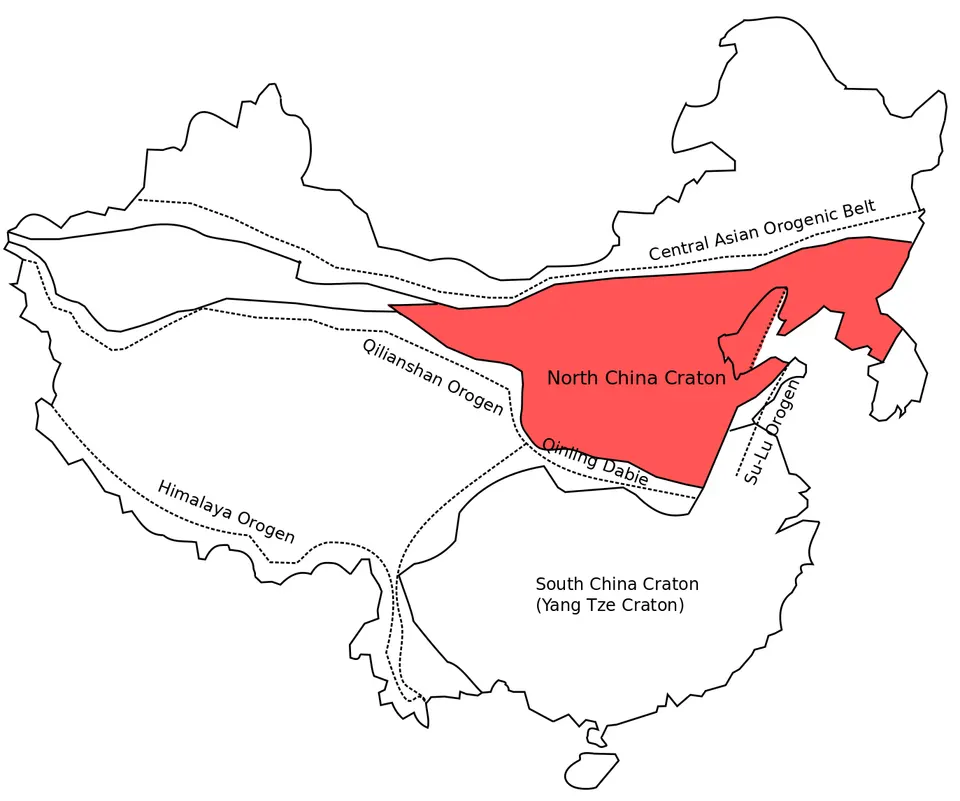
A study of the North China Craton suggests that two different kinds of subduction operated there in the late Archean. In one, ancient slabs sank at shallow angles. In the other, they sank more steeply. The team reports the work in Science Advances, and its evidence comes from how oxidized the mantle beneath the region was.
In subduction, one tectonic plate sinks beneath another and returns to the mantle. The authors note that Earth's outer shell has probably been recycled this way since the late Archean. Even so, the geometry and temperature structure of those early systems are still poorly understood. To probe them, the researchers estimated oxygen fugacity, a measure of how oxidizing or reducing conditions are, in mantle sources that had been altered by recycled surface rocks. They paired those estimates with thermodynamic models of lithosphere structure and other geological evidence.
The dominant style involved shallow slabs beneath a thick overriding plate, with a relatively reduced mantle above the sinking slab. A less common style, found only in some places, involved steeper slabs, a thinner overriding plate and a more oxidized mantle source.
Steep subduction is the norm on the modern Earth. Here, the researchers argue that flat or shallow subduction did much to shape early Earth's distinctive tectonic history. They also suggest that the localized development of steep subduction may have helped oxidize the mantle and tied Earth's deep interior more closely to its surface environments.
Why it matters
The findings suggest that subduction on the early Earth may have worked quite differently than it does today. They also hint at how deep-Earth processes could have influenced surface environments.
What we don't know yet
The two subduction styles are inferred from mantle chemistry and modeling in a single region, the North China Craton. The proposed links to mantle oxidation and surface environments are stated as possibilities.
Terms in this story
- Oxygen fugacity
- A measure of how readily oxygen is available to react in rocks or melts, showing whether conditions are oxidizing or reducing.
- Craton
- An old, stable core of a continent that has survived for billions of years.
- Archean
- An early eon of Earth's history, from roughly 4 to 2.5 billion years ago.
Sources and verification
DexScience articles are produced with AI assistance and an automated fact-check against the linked sources. Spotted an error? Tell us and we will correct it openly.