Key points
- The study describes the development of a rip current forecast designed to work at a national scale for Aotearoa New Zealand.
- It was published on 16 November 2026 in the peer-reviewed journal Natural Hazards and Earth System Sciences.
- The journal is published by EGU / Copernicus Publications; the paper's DOI is 10.5194/nhess-26-5873-2026.
Researchers have described how they developed a rip current forecast for Aotearoa New Zealand. According to the paper's title, the forecast is national in scale. The peer-reviewed study appeared on 16 November 2026 in Natural Hazards and Earth System Sciences, a journal published by EGU / Copernicus Publications.
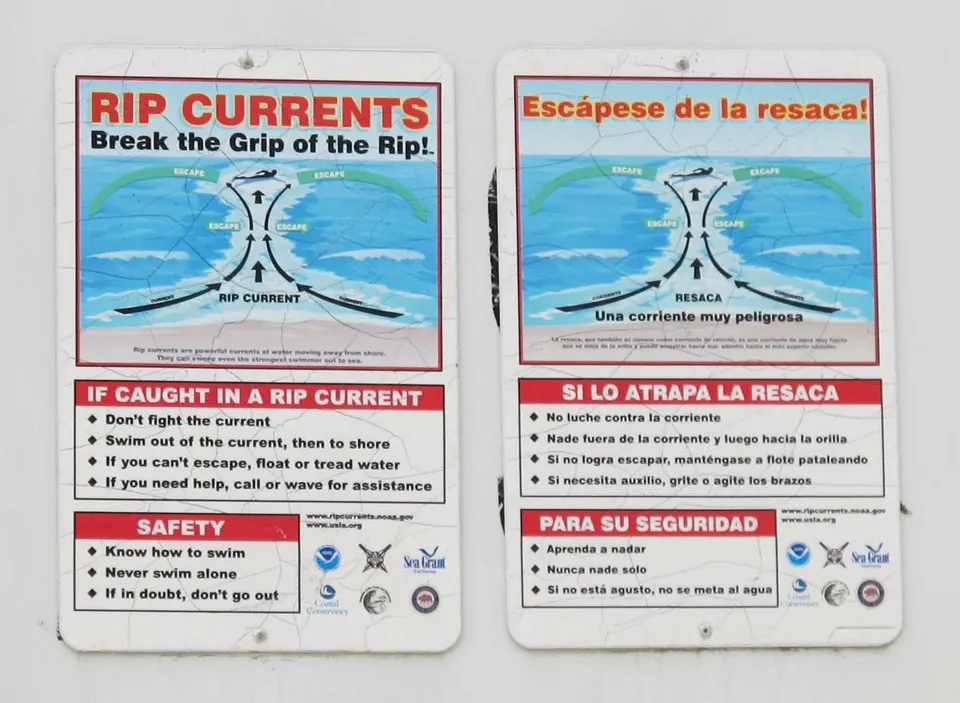
Rip currents are narrow, fast-moving streams of water that flow out to sea through the surf zone, and they can carry swimmers away from the beach. A rip current forecast tries to warn people ahead of time when conditions at the coast are likely to make these currents dangerous.
The paper itself is titled Development of a national-scale rip current forecast for Aotearoa New Zealand. That wording tells readers two things: the work is about building a forecasting tool, and the tool is meant to operate at the level of the whole nation rather than for one location.
The material DexScience received for this story did not include the paper's abstract or results. As a result, we cannot report how the forecast works, which data it relies on or how well it performs. Readers who want those details can look up the full study using its DOI, 10.5194/nhess-26-5873-2026.
Why it matters
The work describes a rip current forecast designed to operate at a national scale for Aotearoa New Zealand, rather than for one location.
What we don't know yet
The source material available for this article did not include the study's methods, results or the limitations the authors name, so none of these are reported here.
Terms in this story
- Rip current
- A narrow, strong flow of water that moves away from the shore through the breaking waves.
- Surf zone
- The stretch of water near the shore where waves break.
Sources and verification
DexScience articles are produced with AI assistance and an automated fact-check against the linked sources. Spotted an error? Tell us and we will correct it openly.