Key points
- A predicted structure of ZtLRR, secreted by *Zymoseptoria tritici*, suggests close resemblance to leucine-rich repeats in plant cell-surface immune receptors.
- In tobacco-relative leaves it blocked reactive oxygen species bursts triggered by flg22, laminarin and chitin.
- Transgenic wheat producing ZtLRR had weakened immunity and was hyper-susceptible to a compatible fungal isolate.
- Most plant-like secreted LRRs screened from other fungal species also suppressed plant immune responses.
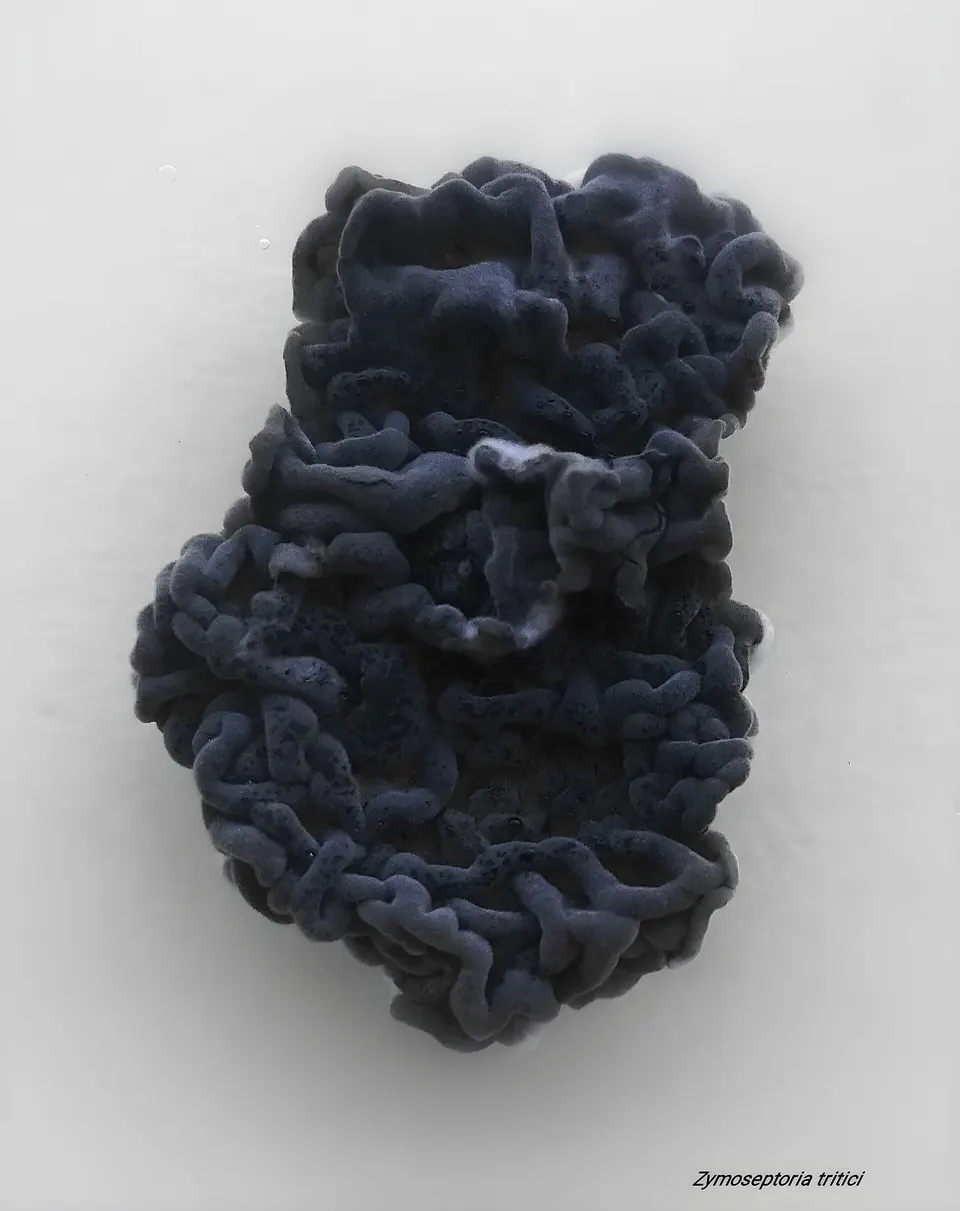
A wheat-infecting fungus appears to blunt its host's defenses with a protein that resembles the plant's own alarm equipment. In PLOS Pathogens, Haider Ali, Graeme J. Kettles and colleagues describe a secreted protein from Zymoseptoria tritici, the fungus behind the wheat disease septoria tritici blotch, that suppresses plant immune signaling and makes wheat easier to infect.
The protein, called ZtLRR, contains a leucine-rich repeat (LRR) domain. Plants use LRR domains on the outside of cells as the sensing part of immune receptors, which detect molecules that signal an invader. A computational structure prediction, which the authors report had strong statistical support, suggested ZtLRR closely resembles the LRRs found in those plant cell-surface receptors.
When the team expressed ZtLRR in leaves of Nicotiana benthamiana, a tobacco relative widely used as a laboratory test plant, it strongly inhibited the burst of reactive oxygen species that leaves normally produce after exposure to the immune-triggering molecules flg22, laminarin and chitin. It also suppressed cell death caused by another Z. tritici protein, Zt12, though not the death triggered by the fungal toxin Zt6. Transgenic wheat lines made to produce ZtLRR showed similarly weakened immune responses and were hyper-susceptible to a compatible Z. tritici isolate.
Searching fungal genomes, the researchers found more secreted LRR proteins across a diverse range of species, structurally alike despite little similarity in their underlying sequences. Most of the plant-like ones they screened also damped down plant immune responses. That, the team says, suggests these proteins may represent a strategy shared by many fungi for interfering with plant immune signaling.
Why it matters
Plant pathogens threaten food security, and knowing which molecules they use to switch off crop defenses points to targets for protecting wheat and other crops.
What we don't know yet
Most of the immune-suppression tests were done by expressing the fungal proteins in plant leaves rather than during natural infection, and the key resemblance to plant receptors comes from a computational prediction. The paper is posted as an uncorrected proof.
Terms in this story
- Effector
- A small protein a pathogen secretes into its host to manipulate the host's defenses or physiology.
- Leucine-rich repeat (LRR)
- A curved protein domain that plants use in cell-surface receptors to recognize specific molecules, including signs of infection.
- Reactive oxygen species burst
- A rapid release of chemically reactive oxygen molecules that plant tissue produces as an early defense response.
Sources and verification
DexScience articles are produced with AI assistance and an automated fact-check against the linked sources. Spotted an error? Tell us and we will correct it openly.