Key points
- Affinity purification-mass spectrometry identified host interaction partners for 21 chlamydia type III secretion system effectors during infection.
- The effector CT584, renamed CebN, binds nucleoporins and the mRNA export factor Rae1 through its C-terminus.
- CebN gathered at the nuclear envelope in infected cells and in uninfected bystander cells nearby.
- Bacteria depleted of CebN replicated less and formed smaller inclusions inside host cells.
Researchers report in PLOS Pathogens that the bacterium Chlamydia trachomatis injects a protein into human cells that parks itself at the edge of the nucleus and interferes with an immune signaling protein's entry. The study, with Brianna P. Steiert as first author and Mary M. Weber as senior author, renamed the bacterial protein, previously known as CT584, CebN, short for Chlamydia effector blocking nuclear transport.
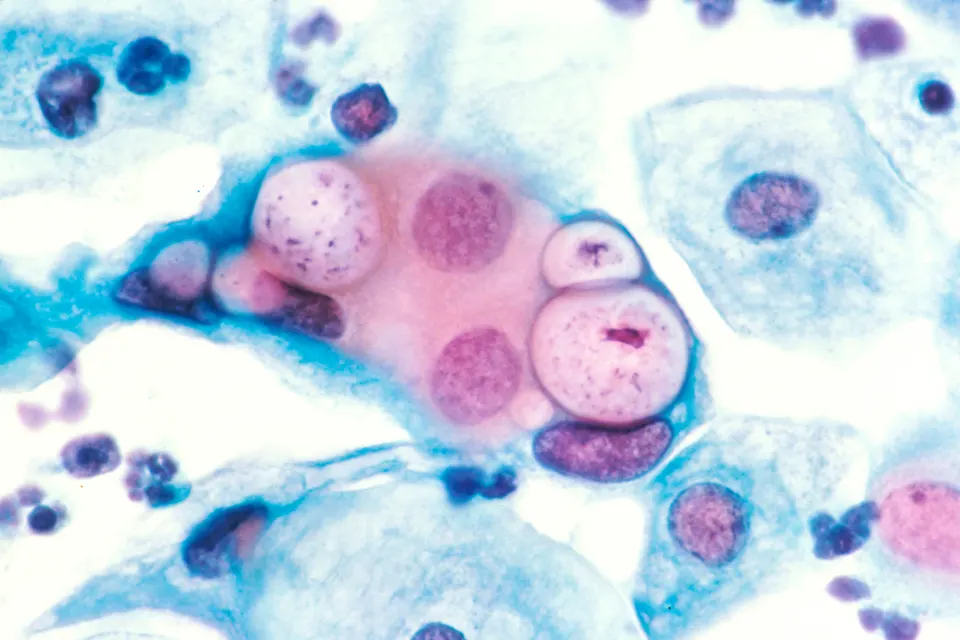
C. trachomatis lives only inside host cells, and it rewires them using secreted proteins called effectors. To find out what those effectors grab onto, the group used affinity purification-mass spectrometry, a technique that pulls a tagged protein out of a cell along with whatever is stuck to it. Working during actual infection of cultured cells, they mapped high-confidence human interaction partners for 21 effectors delivered by the conventional type III secretion system, the needle-like apparatus the bacterium uses to inject proteins into the cell's interior.
Zooming in on CebN, the researchers found that its tail end binds several nucleoporins, the proteins that line the nuclear pore, along with the messenger RNA export factor Rae1 -- host factors already linked to immune evasion by some viruses. CebN collected at the nuclear envelope not only in infected cells but also in neighboring uninfected bystander cells. Using bacteria engineered to make less CebN, and separately by expressing the protein on its own in cells, the authors report that CebN is both necessary and sufficient to disturb the nuclear localization of STAT1, a protein that must reach the nucleus to switch on interferon-driven defense genes.
Bacteria depleted of CebN replicated less and built smaller inclusions, the membrane-bound compartments in which chlamydia grows. The authors suggest that hijacking traffic through the nuclear pore is a strategy shared by bacteria and viruses alike.
Why it matters
*C. trachomatis* is the most common bacterial sexually transmitted infection worldwide and a leading cause of infectious blindness, and no vaccine exists; knowing which host machinery its effectors seize could point toward new treatments.
What we don't know yet
The work was done in cultured human cell lines using laboratory strains, not in people or animals, and the paper is posted as an uncorrected proof.
Terms in this story
- Effector protein
- A protein a pathogen secretes or injects into a host cell to alter that cell's behavior in the pathogen's favor.
- Nucleoporin
- One of the proteins forming the nuclear pore, the channel that controls what passes between a cell's nucleus and the rest of the cell.
- STAT1
- A human signaling protein that moves into the nucleus to turn on interferon-driven immune defense genes.
Sources and verification
DexScience articles are produced with AI assistance and an automated fact-check against the linked sources. Spotted an error? Tell us and we will correct it openly.