Key points
- Researchers analyzed high-coverage whole genomes from 1,092 people across eight regions of Africa, Asia and Oceania.
- The sample included 670 farmers, 341 hunter-gatherers and 81 pastoralists, with 166 genomes newly sequenced for the study.
- The team found 4,145 variants linked to how people get their food, which reduced to 1,883 roughly independent signals.
- The strongest signal sat in HLA-DPB1, an immune gene, and flagged variants clustered in regions that regulate genes.
The switch from foraging to farming appears to have left measurable traces in human DNA, and some of those traces recur in groups living on different continents. Researchers compared the whole genomes of 1,092 people in Africa, Asia and Oceania who farm, herd livestock, or hunt and gather. They identified 4,145 genetic variants whose frequencies track how a population feeds itself. The team reports in Nature Ecology & Evolution that many of the strongest signals sit in genes tied to immunity and metabolism.
According to the authors, farming first emerged in the Fertile Crescent about 10,000 to 12,000 years ago and later arose independently in other parts of the world. Wherever it spread, it tended to bring settled, crowded villages and close contact with livestock. Diets leaned on cereals and legumes and contained less fiber, fewer micronutrients and less protein. These changes increased exposure to infections, including diseases that jump from animals to people, and have been tied to heart and metabolic disease. The researchers point out that most earlier genetic studies looked at a single population, and the few that examined selection during the shift to farming were confined to Europe.
For the new work, the team sequenced 166 genomes: 95 from Uganda (70 Batwa and 25 Bakiga), 43 from the Philippines (20 Mamanwa and 23 Manobo) and 28 from Sri Lanka (15 Adivasi and 13 Sinhalese). They added 926 genomes from collaborators' cohorts, giving eight regions that run from East Asia to Southern Africa. The sequencing was deep, averaging roughly 31.8-fold coverage, meaning each stretch of DNA was read about 31.8 times on average. It turned up 59,774,327 single-letter DNA differences, and 7,121,909 of them did not appear in the dbSNP v156 reference catalog.
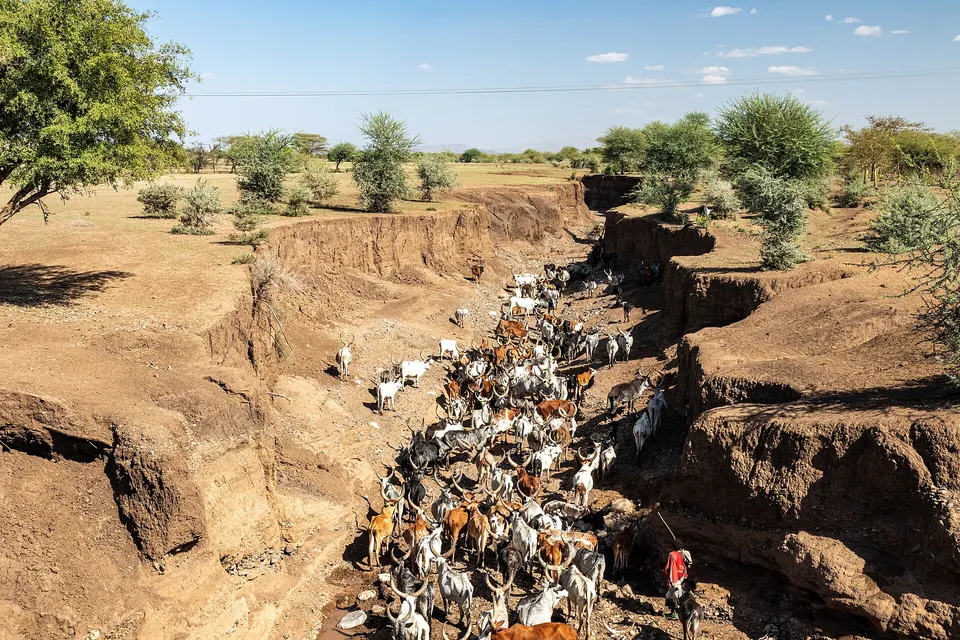
Where they could, the researchers compared foragers and farmers who are closely related or live near each other, so that lifestyle could be studied as a local pressure. In Sri Lanka, the Sinhalese farmers and Adivasi hunter-gatherers share genetic ancestry. The Batwa and Bakiga of Uganda split roughly 130,000 to 160,000 years ago, so for that pair the team relied on geographic closeness. In Southern Africa, the ≠Khomani San foragers were compared with Nama herders, who share recent ancestry with them and took up pastoralism around 2,500 years ago.
The team then used a statistical tool called Bayenv, which tests whether the frequency of a variant rises or falls along with an environmental factor. In this case the factor was subsistence, or how a group obtains food. Once variants inherited together were grouped, the 4,145 hits came down to 1,883 roughly independent signals. The top 25 variants located in genes involved immune, metabolic, nervous system and sperm-production processes. A broader analysis found 408 biological pathways overrepresented among the genes involved.
The strongest signal was a variant called rs9296077 in HLA-DPB1. This gene encodes an MHC class II molecule, which immune cells use to display fragments of invaders. The variant lies in an untranslated region, a part of the gene's message that is not turned into protein. The flagged variants as a whole were concentrated in these regions and in enhancer-like stretches of DNA. The researchers say this is consistent with a broader trend of natural selection acting on the DNA elements that regulate genes.
The team also checked their results against ancient Eurasian genomes. Their flagged variants were four times as likely to carry strong evidence of positive selection during the past 10,000 years. The authors say this overlap supports the idea that the shared signals are real adaptations to changes in food, population structure and disease pressure.
Why it matters
The authors argue that learning how populations adapted to farming can clarify the biological consequences of the agricultural revolution. Looking across continents helps separate adaptations unique to one group from those that arose repeatedly.
What we don't know yet
The study relies on present-day populations as stand-ins for past lifestyles. The East Asia and Oceania samples include only farming groups. In some regions the foragers and farmers being compared do not share recent ancestry, so the researchers paired them by geography instead. The cross-check against ancient DNA used only Eurasian genomes.
Terms in this story
- Natural selection
- The process by which gene variants that help survival or reproduction in a given environment become more common over generations.
- Untranslated region (UTR)
- A stretch of a gene's RNA message that is not turned into protein but can affect how much protein is made.
- MHC class II
- A family of molecules that immune cells use to display pieces of microbes so other immune cells can recognize them.
Sources and verification
DexScience articles are produced with AI assistance and an automated fact-check against the linked sources. Spotted an error? Tell us and we will correct it openly.