Key points
- Depleting IncD gave smaller inclusions, fewer infectious progeny and inclusions that lysed prematurely.
- Complete loss of IncD blocked propagation unless CERT was recruited to the inclusion another way.
- IncD was also required for Chlamydia infection in a mouse model, the authors report.
- The findings appear in PLOS Pathogens, published November 18, 2026, as an uncorrected proof.
A single bacterial protein stitched into the membrane that surrounds Chlamydia trachomatis inside human cells turns out to be indispensable for the microbe to multiply, researchers report in PLOS Pathogens. The protein, IncD, pulls a host lipid-shuttling protein called CERT to the bacterium's compartment. Without it, the infection stalls.
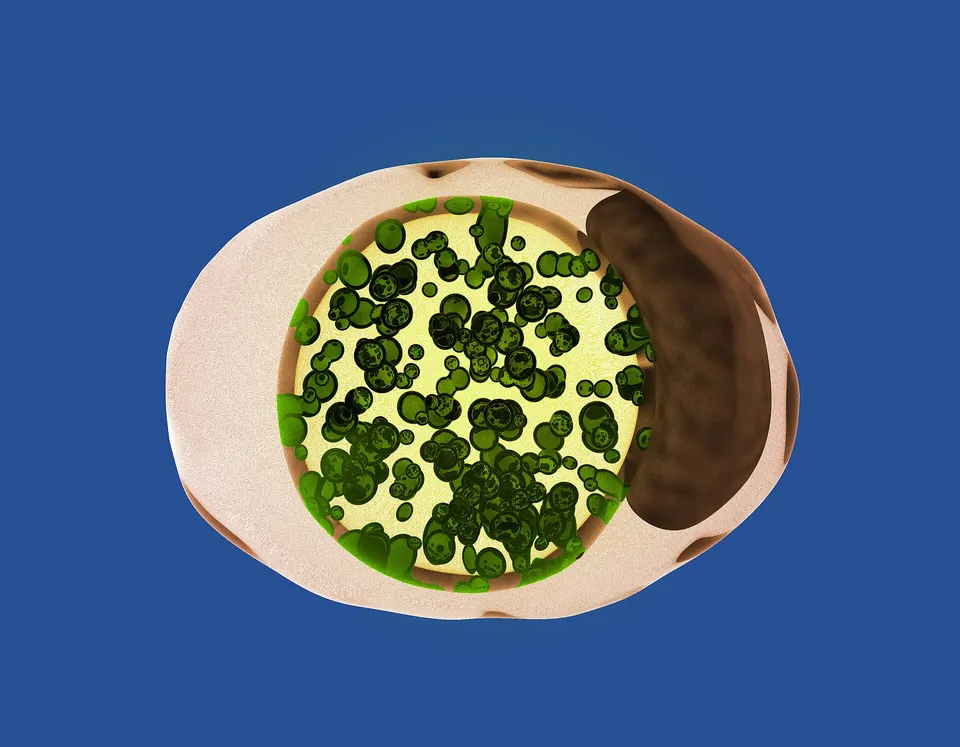
C. trachomatis is an obligate intracellular bacterium, meaning it can only grow inside host cells, and the journal notes it is the most frequent bacterial cause of sexually transmitted infections worldwide. It replicates inside a membrane-bound bubble called the inclusion, studded with bacterial proteins delivered by a type III secretion system, a molecular syringe that injects effectors into the host. The bacteria depend on host sphingomyelin, a membrane lipid, and CERT ferries its precursor ceramide. CERT feeds the inclusion by two routes, which has made it hard to tell which one matters.
The team, led by Isabelle Derré, built conditional and null incD mutants in C. trachomatis and C. muridarum. Depleting IncD, or using a version that binds CERT poorly, produced smaller inclusions, fewer infectious offspring and inclusions that burst early. Removing IncD entirely blocked propagation altogether, unless CERT was artificially recruited to the inclusion by other means, which restored growth. IncD was also required for infection in a mouse model.
The authors conclude that IncD is an essential effector and that the two sphingomyelin-delivery routes contribute unequally. They suggest IncD could be a target for disrupting infection, though no drug or vaccine was tested here.
Why it matters
Untreated chlamydia infections can lead to pelvic inflammatory disease, ectopic pregnancy and infertility, and the authors identify IncD as a possible target for disrupting infection.
What we don't know yet
The work was done in cultured cells and a mouse model, not in people, and the paper is posted as an uncorrected proof; the researchers note other enzymes may also contribute to sphingomyelin synthesis during infection.
Terms in this story
- Inclusion
- The membrane-bound compartment inside a host cell where Chlamydia replicates.
- Type III secretion system
- A needle-like bacterial apparatus that injects proteins, called effectors, into host cells.
- CERT
- A host ceramide transfer protein that moves the precursor of sphingomyelin between membranes.
Sources and verification
DexScience articles are produced with AI assistance and an automated fact-check against the linked sources. Spotted an error? Tell us and we will correct it openly.