Key points
- The uncrewed SpaceX Dragon undocked from the International Space Station at 12:05 p.m. EST on Nov. 20, 2026.
- It departed from the space-facing port of the station's Harmony module after a command from SpaceX ground controllers.
- Splashdown off the California coast is expected at about 1:55 p.m. PST on Saturday, Nov. 21.
- NASA will not stream the splashdown but plans to post updates on its space station blog.
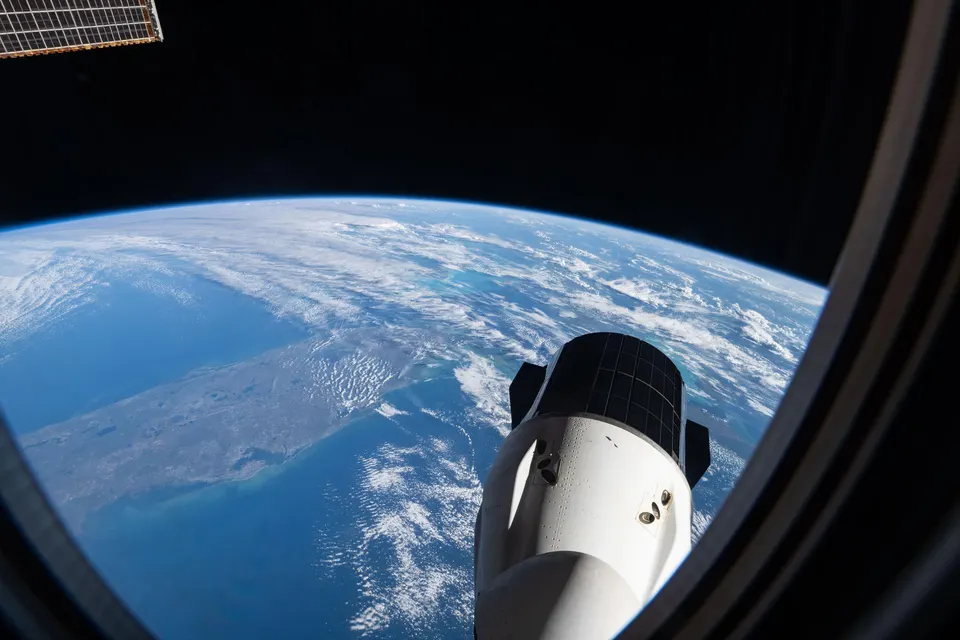
A SpaceX Dragon cargo capsule has left the International Space Station with no crew on board, carrying science and supplies back toward Earth. According to NASA, the spacecraft undocked at 12:05 p.m. EST on Nov. 20, 2026, after SpaceX ground controllers sent the command.
Dragon had been attached to the space-facing port of Harmony, one of the station's modules. Before it left, Dragon was one of four visiting vehicles docked at the outpost. The other three were the Soyuz MS-29 crew spacecraft and two Russian resupply ships, Progress 95 and Progress 96.
The capsule is scheduled to splash down in the ocean off the California coast on Saturday, Nov. 21, at roughly 4:55 p.m. Eastern time, or 1:55 p.m. PST. Unlike most cargo ships, which burn up when they reenter the atmosphere, Dragon is built to survive the trip home. That lets researchers recover experiments and study them in labs on the ground.
NASA says it will not offer a live broadcast of the splashdown. Instead, the agency plans to post progress reports on its space station blog, and it shares station news on X through the @space_station account.
Why it matters
NASA describes the departing Dragon as packed with science and cargo. Its return brings that material from the space station back to Earth.
What we don't know yet
The splashdown time NASA gives is approximate, and the agency did not say what experiments or cargo are aboard.
Terms in this story
- Undocking
- The moment a spacecraft releases its connection to a space station and begins to fly free.
- Splashdown
- A way of landing in which a returning space capsule comes down in the ocean, usually slowed by parachutes.
Sources and verification
DexScience articles are produced with AI assistance and an automated fact-check against the linked sources. Spotted an error? Tell us and we will correct it openly.