Key points
- Both ESCAPADE spacecraft completed powered Earth flybys, the first on Nov. 7 and the second on Nov. 9.
- The second probe imaged Earth from about 38,500 miles away, roughly 3 hours after closest approach.
- The flybys combined engine burns with Earth's gravity to start a 10-month trip to Mars.
- At Mars, the mission will study how the solar wind drives atmospheric loss.
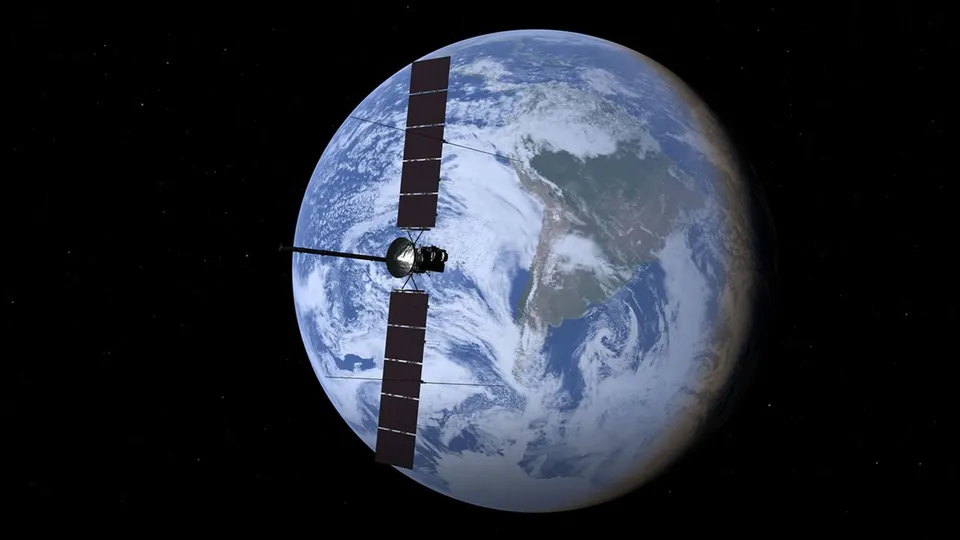
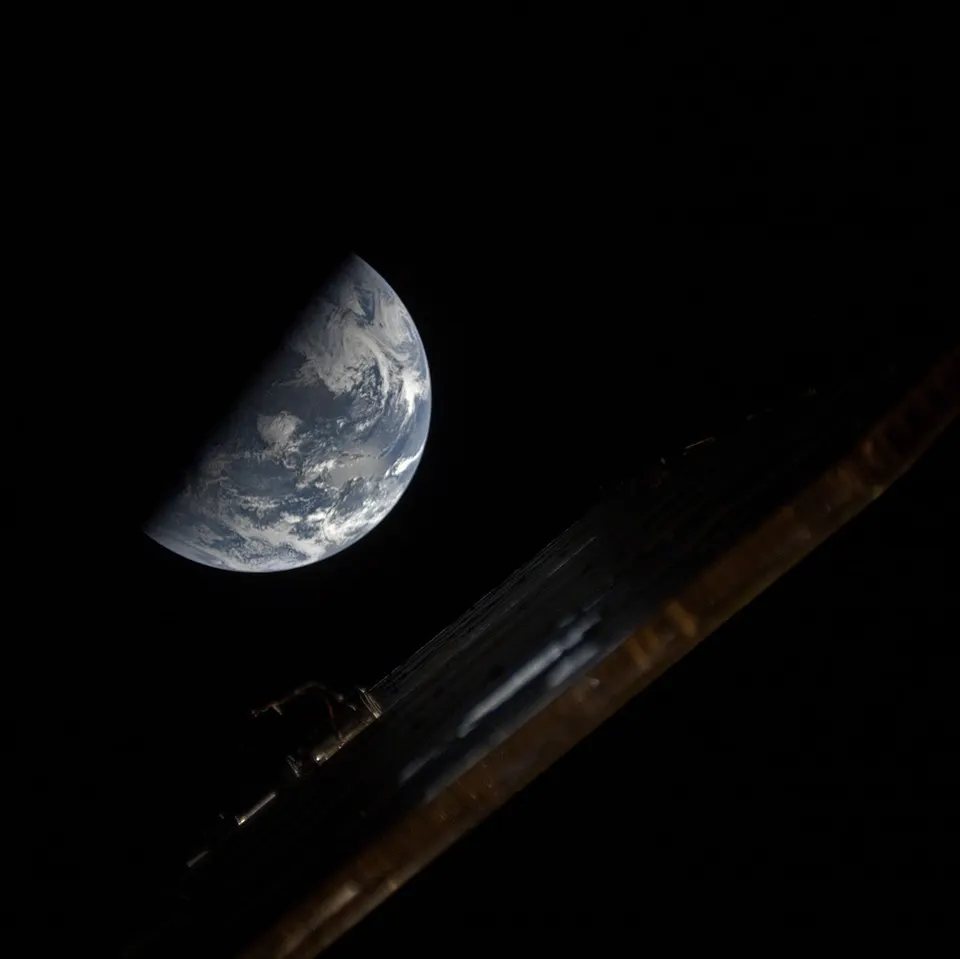
Both of NASA's ESCAPADE spacecraft have now swung past Earth on their way to Mars, and the second one turned its camera back for a last look at home. According to NASA, the probe took pictures of Earth in visible and infrared light around 9 a.m. EST on Nov. 9. That was about 3 hours after its closest approach, and the probe was about 38,500 miles away.
Each twin made a powered flyby, pairing an engine burn with Earth's gravity to push itself onto a 10-month path to Mars. The first passed on Nov. 7, and the second followed two days later. The new pictures came from the Visible and Infrared Observation System camera, provided by Northern Arizona University. They show the Western Hemisphere, with one of the craft's solar panels in the foreground. In one infrared view, brighter areas are warmer than darker ones; the others use color scales in which white, yellow and orange or green mark warmer areas than blue.
Others photographed the spacecraft, too. A Vantor Worldview Legion satellite caught each probe shortly before its closest approach, from roughly 3,000 miles away. The mission's chief engineer from Rocket Lab, the company that built the probes, also photographed both crossing the sky from the Los Angeles area.
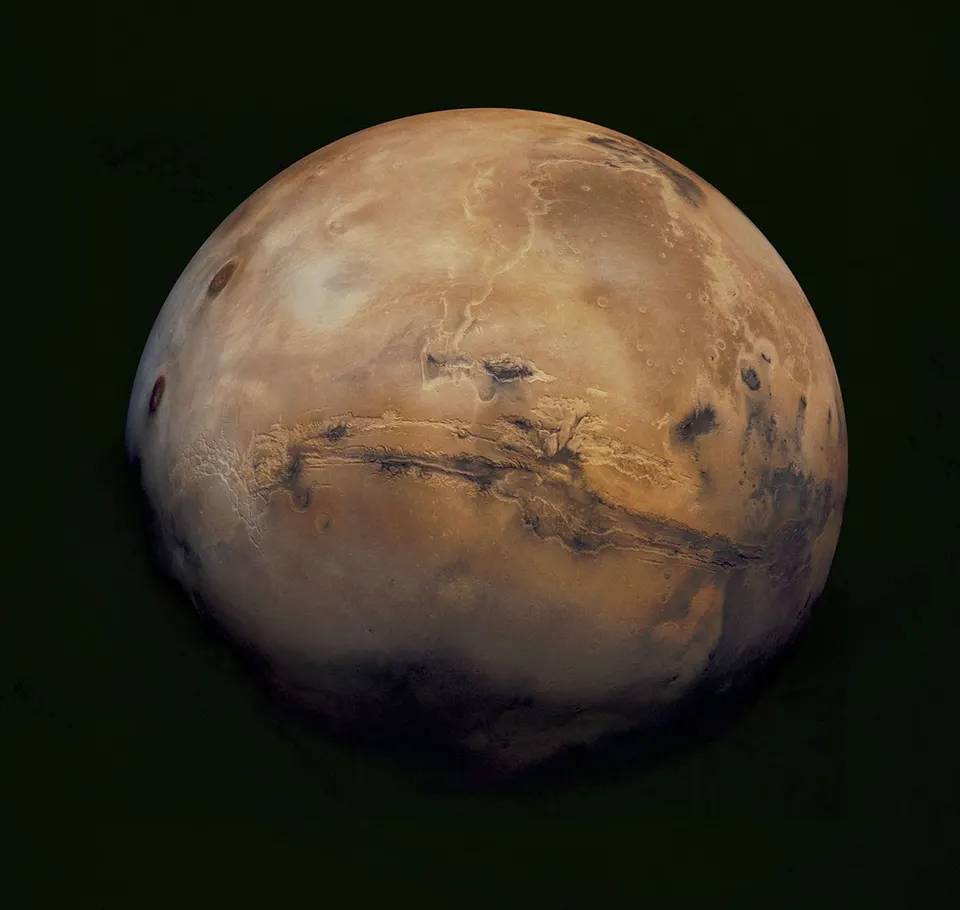
Once in orbit around Mars, ESCAPADE (Escape and Plasma Acceleration and Dynamics Explorers) will examine how the solar wind interacts with the Martian environment and causes the planet to lose atmosphere. The solar wind is a stream of particles from the Sun that moves at a million miles per hour. The University of California, Berkeley's Space Sciences Laboratory leads the mission, and NASA's Heliophysics Division funds it.
Why it matters
The Earth flybys sent both spacecraft toward Mars. There, the mission will study how the solar wind strips away the Red Planet's atmosphere.
What we don't know yet
The mission's study of how the solar wind interacts with Mars will begin once the spacecraft are in orbit around Mars, after a 10-month journey to the planet.
Terms in this story
- Powered flyby
- A close pass by a planet in which a spacecraft fires its engine while also using the planet's gravity to change its speed and direction.
- Solar wind
- A constant stream of charged particles flowing outward from the Sun.
Sources and verification
DexScience articles are produced with AI assistance and an automated fact-check against the linked sources. Spotted an error? Tell us and we will correct it openly.