Key points
- The study followed 210,285 men in Sweden who became fathers for the first time between 2007 and 2011.
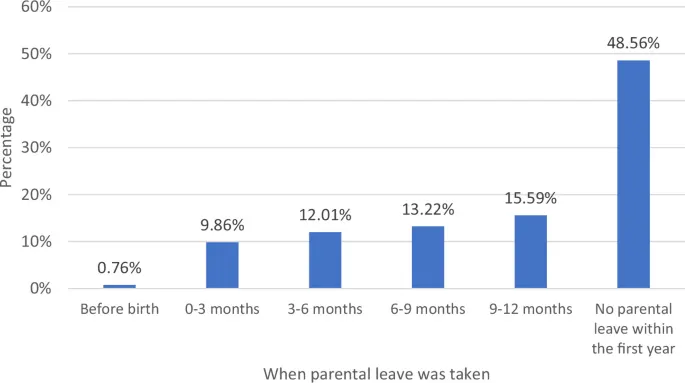
- Just over half of these fathers (51.4%) took parental leave before their child turned one.
- Fathers on basic benefits had higher odds of mental health care than fathers on higher-level benefits, even after adjusting for income.
- Fathers who took no paid leave had higher odds of psychiatric hospital admission (OR 2.22) after adjustment.
In Sweden, first-time fathers who received higher-level parental leave pay were less likely to receive mental health care in the year after their baby's birth. Researchers found this by comparing them with fathers on basic benefits and with fathers who took no paid leave at all. Their study, published in Nature Communications, followed 210,285 men whose first child was born between 2007 and 2011.
Every resident parent in Sweden can get paid leave, but how much they receive depends on their earlier income and job. Only 51.4% of the fathers took any leave before their child's first birthday. The team adjusted for past mental health care, income and employment status. Even then, fathers on basic benefits still had higher odds of using any mental health care than fathers on higher-level benefits. They were also more likely to be prescribed antidepressants or anti-anxiety drugs and to see psychiatric specialists as outpatients. Fathers who took no paid leave had higher odds of using any mental health care, outpatient care and hospital admission. For hospital admission the odds ratio was 2.22. Fathers on the lowest, minimum-level benefit showed no clear difference.
The researchers say higher benefits may help protect fathers' mental health even in a system where every parent is entitled to paid leave. One possible reason is that bigger payments reduce money worries during time away from work. They note that the pattern matches what was seen among mothers in Sweden over the same years.
The study is observational, which means it shows links rather than cause and effect. Because benefit levels depend on what a father earned and whether he worked before the birth, the authors acknowledge that the results may partly reflect wider socioeconomic inequalities.
Why it matters
Most research on mental health after childbirth looks at mothers. The authors say their findings suggest that higher parental leave benefits may protect fathers against poor mental health after birth, even where all parents are entitled to paid leave.
What we don't know yet
Benefit levels depend on fathers' income and employment before the birth, so the authors say the links may partly reflect underlying socioeconomic inequalities rather than the benefits themselves.
Terms in this story
- Odds ratio
- A number comparing how likely an outcome is in one group versus another, where values above 1 mean the outcome is more likely in the first group.
- Postpartum
- The period after a baby is born, here meaning the child's first year.
Sources and verification
DexScience articles are produced with AI assistance and an automated fact-check against the linked sources. Spotted an error? Tell us and we will correct it openly.