Key points
- Researchers profiled nine biopsy-proven cases of enterocolitis following cilta-cel, a CAR-T therapy for multiple myeloma.
- Every case that underwent clinical clonality testing showed monoclonal or oligoclonal T cell populations.
- In a Stanford cohort, median late CAR T cell persistence was 40% of T cells with enterocolitis versus 0% without.
- Persistence alone appears insufficient to cause the condition, because many patients with persistent CAR T cells never developed it.
A serious gut side effect of the multiple myeloma treatment ciltacabtagene autoleucel (cilta-cel) appears to come from the therapy's own engineered immune cells multiplying in the intestine, with a single dominant clone typically making up a large share of them. The team describes the finding in Nature Medicine. The condition, called immune-effector-cell-associated enterocolitis, affects about 1–10% of people who receive cilta-cel. It causes heavy diarrhea and makes it hard for patients to stay adequately nourished, and it already carries an FDA boxed warning.
At MD Anderson, the researchers reviewed 17 patients who had significant gut symptoms and underwent endoscopy, out of 160 cilta-cel infusions. In nine of them, CAR T cells made up at least 20% of the T cells in a gut biopsy. CAR T cells are a patient's own T cells modified to attack cancer. In paired gut and blood samples from eight of these patients, the cells had expanded inside the gut, especially in the duodenum and terminal ileum, beyond their levels in the blood. Genetic tests showed that the gut CAR T cells typically came from a single dominant clone that made up more than a quarter of the detectable T cell repertoire.
Patients with the condition also had much higher levels of CAR T cells in their blood at later time points, a median of 101.84-fold more than patients without it. A validation group of 112 cilta-cel recipients at Stanford showed the same pattern.
The authors note that earlier deeply studied cases closely resembled a slow-growing T cell lymphoproliferative disorder of the digestive tract. They suggest that staining biopsies for CAR T cells, with roughly 20% as a cutoff, could serve as a practical diagnostic tool.
Why it matters
The condition carries an FDA boxed warning, and this study gives doctors a clearer picture of how it develops along with a practical way to diagnose it from gut biopsies.
What we don't know yet
The study included only nine cases. The researchers say persistent CAR T cells in the blood may be necessary but are not sufficient to cause the condition, so other triggers remain unknown. Some possible links, such as high lymphocyte counts, may only become clear in larger cohorts.
Terms in this story
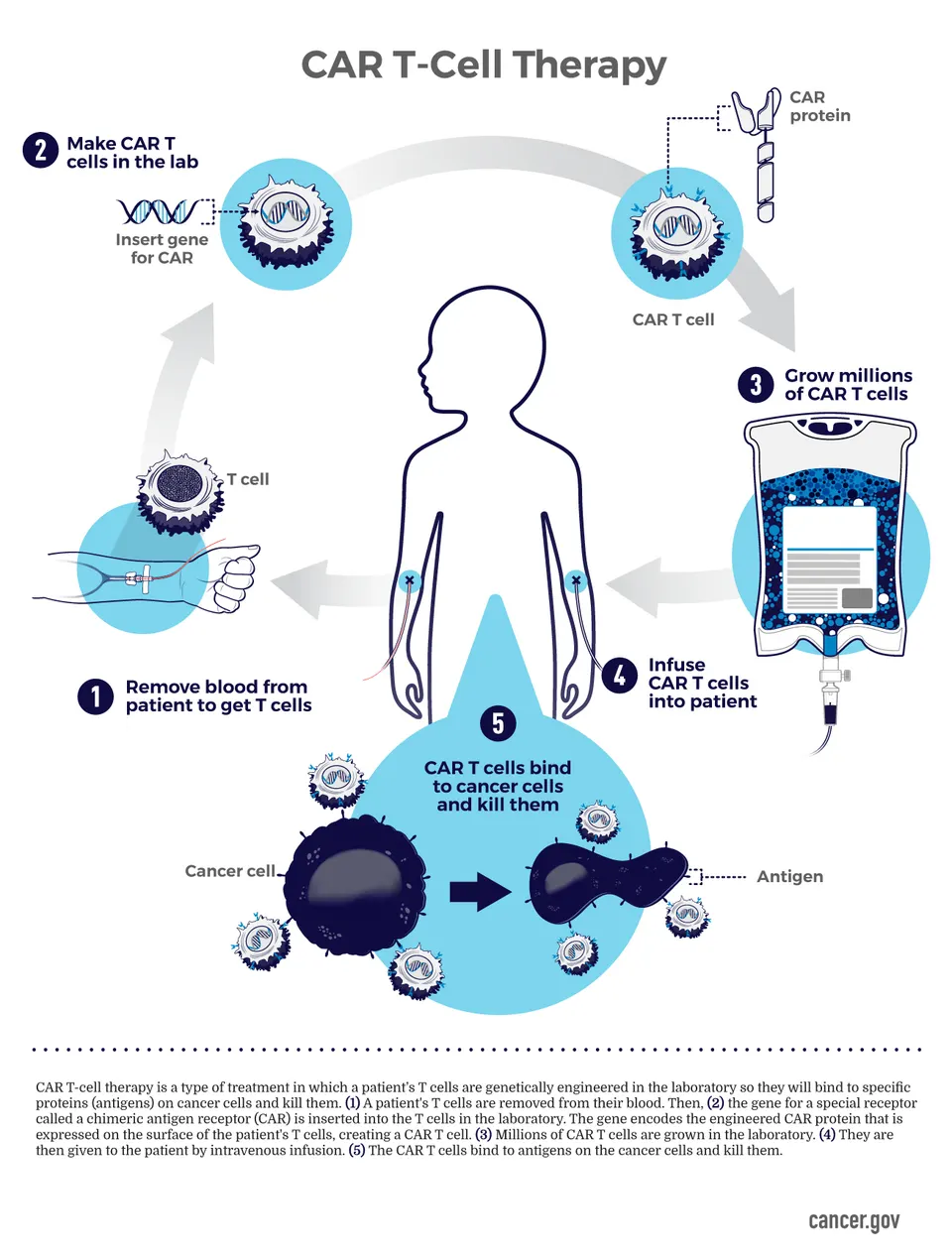
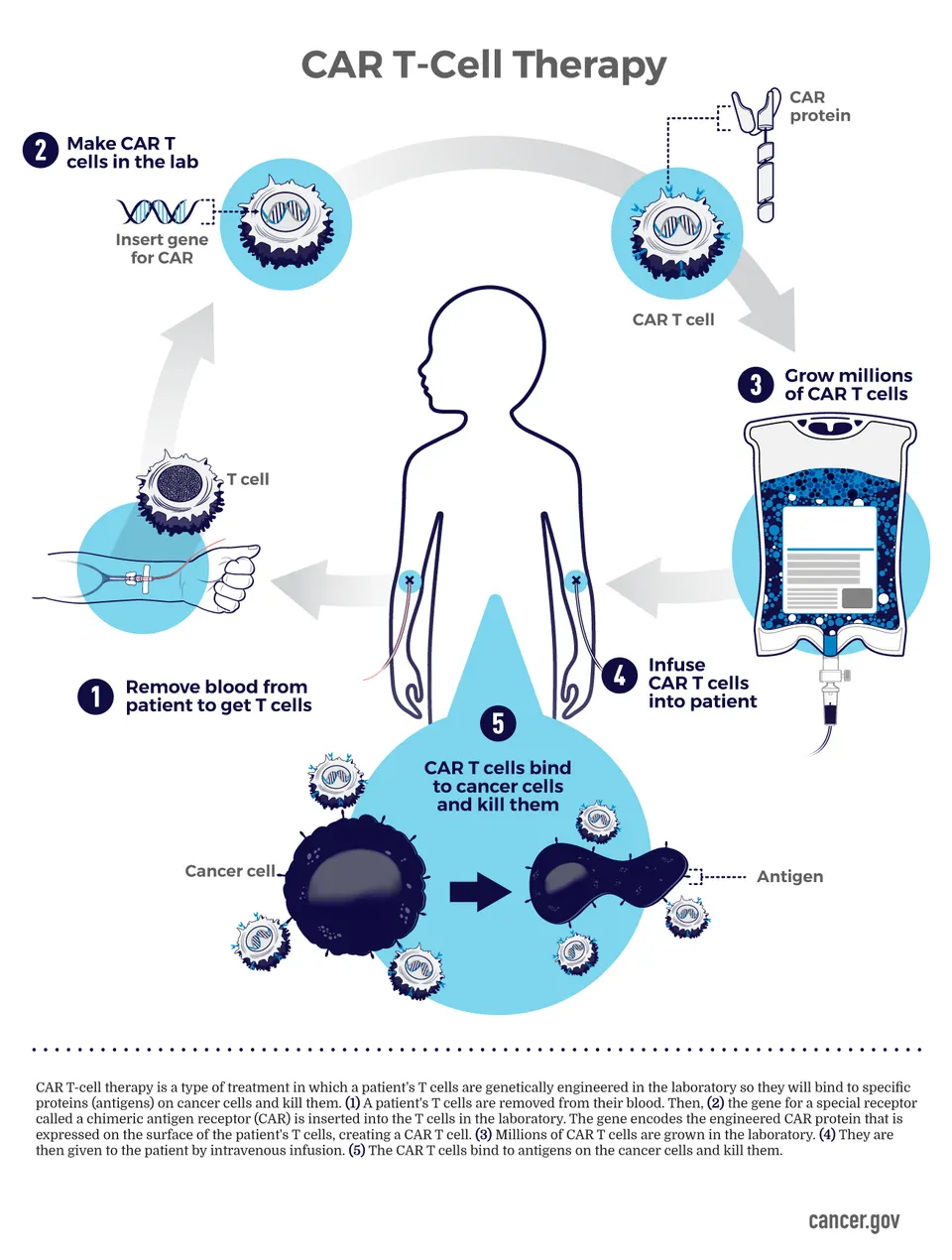
- CAR T cell therapy
- A treatment that re-engineers a patient's own T cells to recognize and attack cancer cells.
- Enterocolitis
- Inflammation of the small intestine and colon.
- Clonal expansion
- Rapid growth of many genetically identical cells that all descend from one original cell.
Sources and verification
DexScience articles are produced with AI assistance and an automated fact-check against the linked sources. Spotted an error? Tell us and we will correct it openly.