Key points
- Across 39 monoclonal antibodies, those targeting the spike S2 subunit lost the most binding when TMPRSS2 was present.
- TMPRSS2 also lowered antibody-dependent killing signals against spike-expressing cells, the researchers report.
- Cutting by TMPRSS2 shed part of S1, reduced ACE2 binding and increased cell-cell fusion.
- Spike on newly produced virus particles showed no significant change in infectivity or antibody recognition.
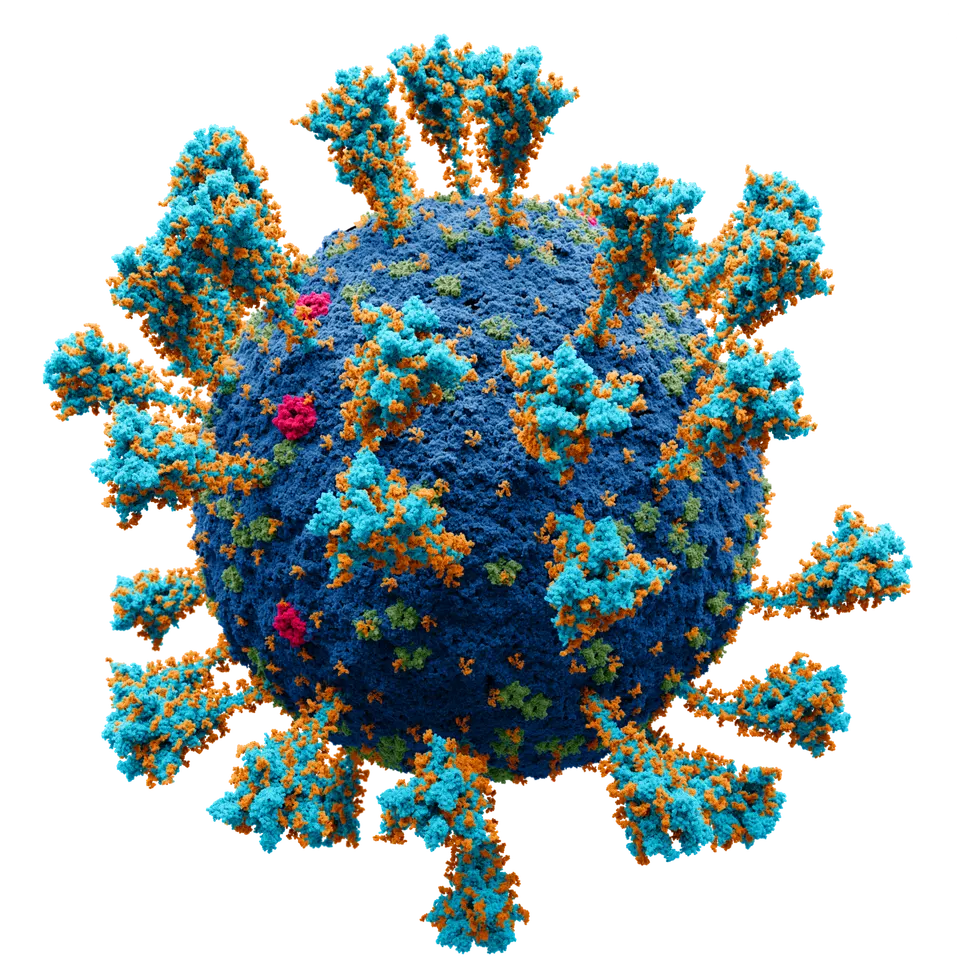
A human enzyme that SARS-CoV-2 uses to break into cells may also help infected cells slip past antibodies, researchers report in PLOS Pathogens. The team, led by Andrea Cottignies-Calamarte with Timothée Bruel as senior author, found that the protease TMPRSS2 cuts the viral spike protein in a way that leaves it harder for antibodies to recognize on the surface of cells. The work was published on November 17, 2026, as an uncorrected proof.
TMPRSS2 is already known as a pro-viral factor: it snips the spike to trigger the fusion step that lets the virus enter a cell. The researchers asked whether that same snipping changes how the immune system sees spike. Using a panel of 39 monoclonal antibodies and serum from people with hybrid immunity — a Wuhan-era infection followed by three mRNA vaccine doses — they measured binding to spike displayed on cells. Antibody binding dropped, and so did antibody-dependent cellular cytotoxicity, the process by which antibodies flag an infected cell for killing. Antibodies aimed at the S2 subunit, the part containing the fusion machinery, were the most affected.
According to the authors, TMPRSS2 causes partial shedding of the S1 subunit and shifts the shape of S2. That reshaped spike bound the cell receptor ACE2 less well but drove more cell-to-cell fusion. The effect was not unique to SARS-CoV-2: it also appeared with other coronaviruses and other TMPRSS family proteins. Spike carried on newly made virus particles, by contrast, was largely spared — flow virometry showed no significant change in infectivity or antibody recognition.
Why it matters
Most known SARS-CoV-2 immune escape comes from mutations in the spike. These results suggest a different, mutation-free route in which a host enzyme reshapes spike so infected cells are less visible to antibody-driven clearance.
What we don't know yet
The experiments were done in cultured cells and with laboratory antibodies and donor serum, not in patients, and the paper is posted as an uncorrected proof. Spike on virus particles was largely unaffected, so the proposed escape route applies to infected cells.
Terms in this story
- TMPRSS2
- A protease anchored in human cell membranes that cuts the coronavirus spike protein and helps the virus fuse with and enter cells.
- ADCC
- Antibody-dependent cellular cytotoxicity, in which antibodies coating an infected cell recruit immune cells to destroy it.
- S1 and S2
- The two subunits of the coronavirus spike; S1 carries the part that grips the ACE2 receptor, while S2 contains the machinery that fuses membranes.
Sources and verification
DexScience articles are produced with AI assistance and an automated fact-check against the linked sources. Spotted an error? Tell us and we will correct it openly.