Key points
- The paper appeared in Nature Communications on November 19, 2026, with DOI 10.1038/s41467-026-79342-7.
- The team programmed dual-targeted CAR-T cells in vivo, meaning the cells are engineered inside the body rather than in a lab dish.
- The authors report the approach aids disruption of tumor blood vessels and entry of T cells into solid tumors.
- Work was funded by Chinese agencies including the National Natural Science Foundation of China.
Researchers in China report a way to engineer cancer-fighting immune cells while they are still inside the body, and to point them at two targets at once. Writing in Nature Communications, the authors say the resulting dual-targeted CAR-T cells help break down the blood vessels that feed solid tumors and help T cells move into the tumor itself. The paper was published on November 19, 2026.
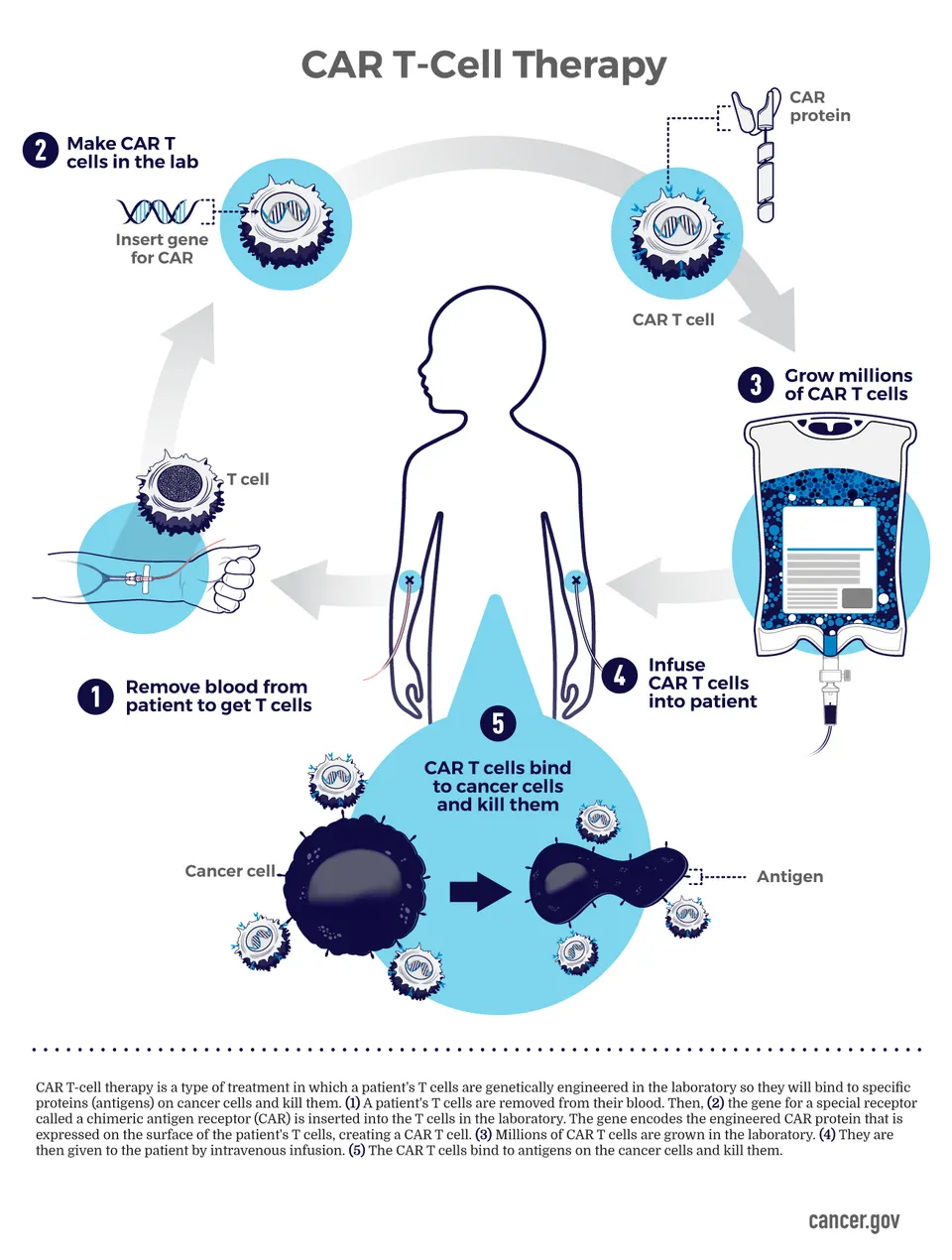
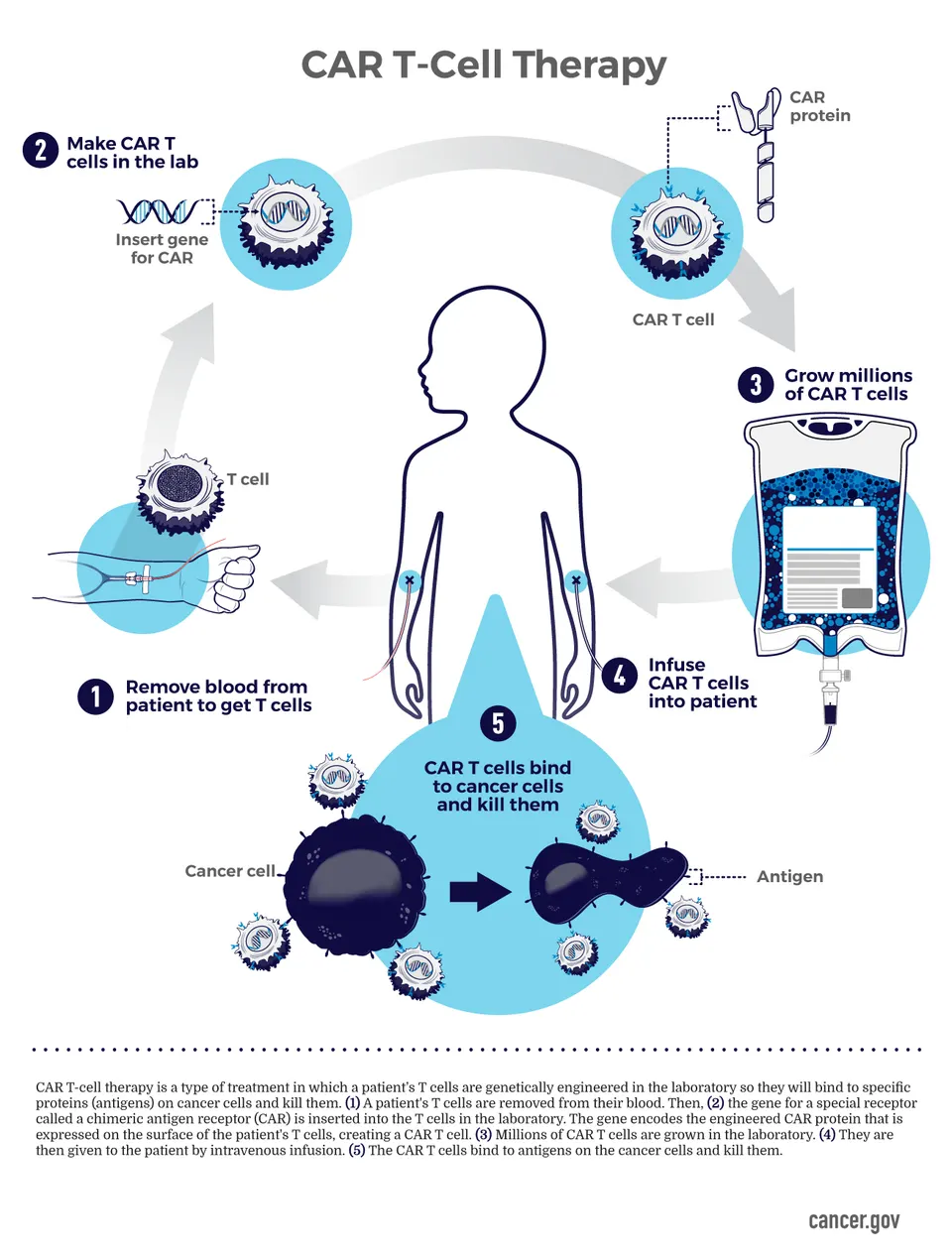
CAR-T therapy works by adding a synthetic receptor to a patient's T cells so they recognize and attack cancer. Conventionally those cells are modified outside the body and infused back in, a slow and costly process. Programming the cells in vivo, as this team describes, means the engineering happens inside the body. The paper's title frames the work around helping T cells infiltrate solid tumors and disrupting tumor vasculature.
The study comes from a large group spanning the National Center for Nanoscience and Technology and the University of Chinese Academy of Sciences in Beijing, Beihang University, Harbin Institute of Technology, Tianjin Medical University, the Institute of Zoology of the Chinese Academy of Sciences, the Chinese People's Liberation Army General Hospital, Capital Medical University and Third Military Medical University in Chongqing. Mengyao Li and Zefang Lu contributed equally, and Yuming Fu and Suping Li are the corresponding authors.
Funding came from the National Key R&D Program of China, the National Natural Science Foundation of China, a Beijing municipal joint fund, and programs of the Chinese Academy of Sciences.
Why it matters
According to the paper's title, the approach is designed to help T cells get into solid tumors, which is the setting the authors target.
What we don't know yet
The material available to us covers the paper's title, authors, funding and publication details rather than its experiments, so the models used, the targets chosen and the size of any effect are not described here. Nothing in that material indicates the approach has been tested in patients, and readers should not assume it works in people.
Terms in this story
- CAR-T cell
- A T cell given a synthetic receptor so that it recognizes and attacks cells carrying a particular target.
- In vivo
- Taking place inside a living body, as opposed to in a dish or test tube.
- Solid tumor
- A cancer that forms a mass of tissue, such as a tumor of the lung or kidney, rather than circulating in the blood.
Sources and verification
DexScience articles are produced with AI assistance and an automated fact-check against the linked sources. Spotted an error? Tell us and we will correct it openly.