Key points
- The device controls the phase of light by modulating optical loss instead of changing a material's refractive index.
- Two loss-modulation stages, each controlled independently, work with multipath interference to reach full-cycle phase tuning.
- The light's amplitude stays constant while the phase is adjusted, the researchers report in Nature Communications.
- A theory based on conserved topological charges shows how non-Hermitian effects can give robust, topologically protected phase control.
Researchers have built a phase shifter for photonic circuits that adjusts light in a different way. Most such devices change how a material slows light. This one changes how much light is lost. In a paper in Nature Communications, the team reports that their synthetic phase shifter achieves full-cycle phase tunability while the amplitude of the light stays constant.
Phase shifters are key adjustable parts of the circuits that guide light. Combined with passive components, they steer light for communication, sensing, analog signal processing and quantum control. Conventional designs tune the refractive index, a measure of how strongly a material slows light, through mechanisms such as heat (the thermo-optic effect) or electric fields (the electro-optic effect). The authors argue that in practice these index-based approaches limit circuit size, bandwidth and scalability, and so hold back large-scale photonic integration.
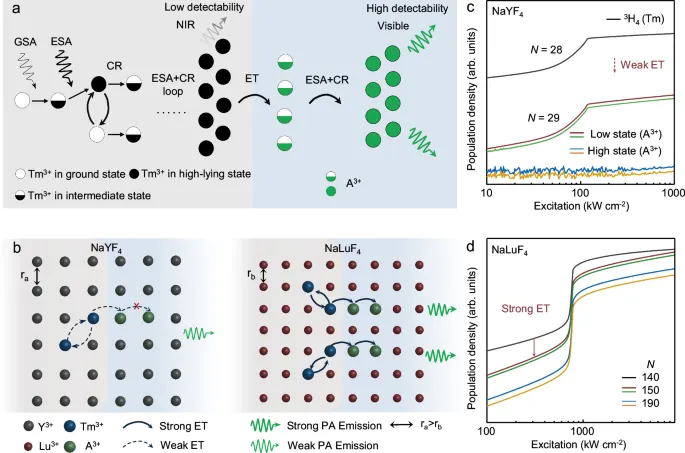
Their device uses two loss-modulation stages, each controlled independently. Light travels along several paths that interfere with one another. The team also developed a theory built on conserved topological charges. It describes how non-Hermitian effects can produce phase control that is robust and topologically protected. Non-Hermitian systems are ones that exchange energy with their surroundings, for example through loss.
The researchers suggest that moving from index control to loss modulation could open a route to scalable integrated photonics, with uses ranging from communications and sensing to classical and quantum information processing with light. The paper is an accepted, peer-reviewed version released early and may still be edited before the final version appears.
Why it matters
The authors say index-based phase shifters have become bottlenecks for large-scale photonic integration, and controlling phase through loss could support more scalable photonic circuits for communications, sensing and information processing.
What we don't know yet
The published text is an accepted version shared early and may be edited before the final Version of Record. The claim that the approach could make photonic systems more scalable is a forward-looking statement from the researchers, not a demonstrated result.
Terms in this story
- Phase shifter
- An adjustable component that shifts the timing of a light wave's peaks and troughs so the light can be steered through a circuit.
- Refractive index
- A number describing how much a material slows light compared with its speed in a vacuum.
- Non-Hermitian
- Describes physical systems that exchange energy with their surroundings, for example by losing light, rather than conserving it.
Sources and verification
DexScience articles are produced with AI assistance and an automated fact-check against the linked sources. Spotted an error? Tell us and we will correct it openly.