Key points
- Phenylacetylglutamine, a metabolite from gut microbes, worsened aortic aneurysm and dissection in male mice.
- The team reports the effect works by activating integrin β1 on macrophages, a type of immune cell.
- The study appeared in Nature Communications on November 24, 2026.
- Researchers from Peking University and other Chinese institutions led the work, which also drew on clinical samples.
A compound made by gut microbes can make a dangerous disease of the body's main artery worse in male mice, according to a study published November 24, 2026, in Nature Communications. The researchers report that the molecule, phenylacetylglutamine, aggravates aortic aneurysm and dissection by switching on a protein called integrin β1 in macrophages. The work links the gut to the aorta through the immune system.
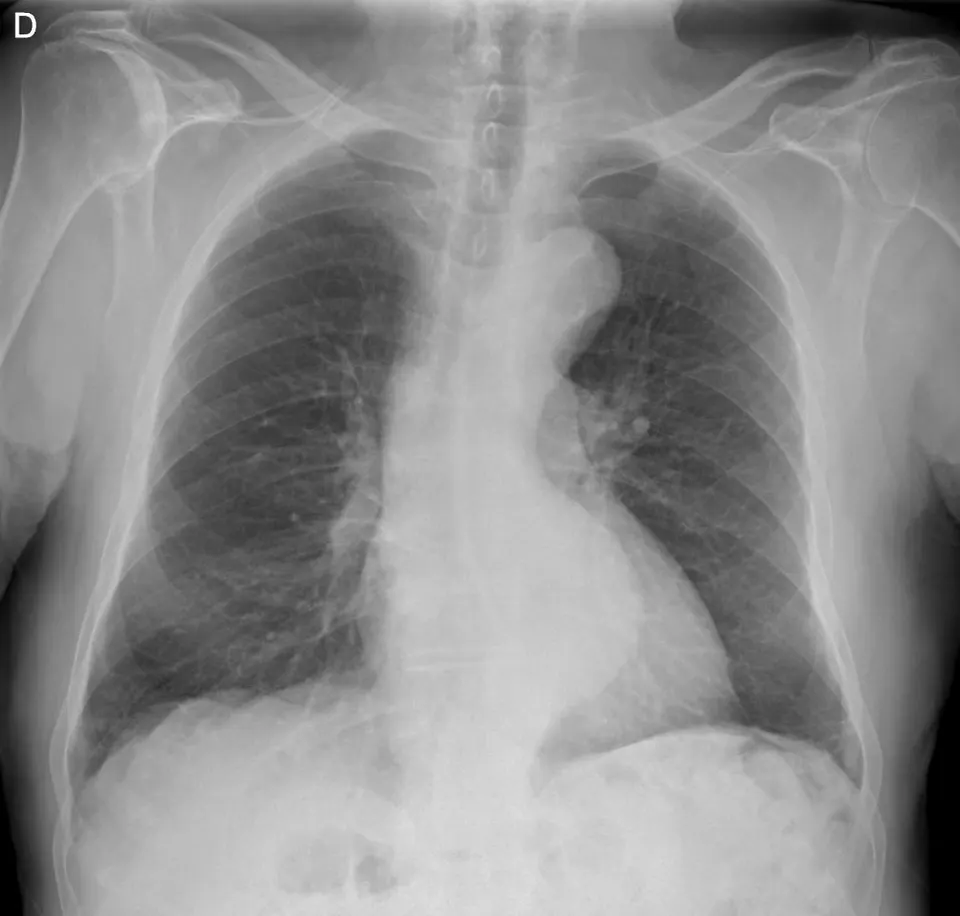
The aorta is the large artery that carries blood away from the heart; an aneurysm is a weakened, bulging stretch of its wall, and a dissection is a tear inside that wall. Macrophages are immune cells, and integrins are proteins on the cell surface that help cells sense and respond to their surroundings.
The team spans Peking University and a number of other hospitals and research institutes in China, and the corresponding authors are Lixin Wang, Dao Wen Wang and Lemin Zheng. The authors thank Tongji Hospital in Wuhan and the Department of Vascular Surgery at Zhongshan Hospital, Fudan University, for access to clinical samples. National programs in China funded the research, among them the National Key R&D Program of China and the National Natural Science Foundation of China.
The core findings come from animal experiments, and the study title states they were made in male mice. The material available to DexScience does not describe how big the effects were or what the clinical samples showed, and the results have not been shown to apply to people.
Why it matters
The study names a specific gut microbe product and an immune-cell pathway that, in male mice, make aortic aneurysm and dissection worse. That gives researchers a defined mechanism to investigate further.
What we don't know yet
The mechanism was shown in male mice. The available source material does not report effect sizes or results in people, so it is unclear whether the same thing happens in humans.
Terms in this story
- Phenylacetylglutamine
- A small molecule produced when gut microbes break down substances in the gut, which then circulates in the body.
- Aortic dissection
- A tear inside the wall of the aorta that can let blood force the wall's layers apart.
- Macrophage
- An immune cell that engulfs debris and microbes and helps drive inflammation.
Sources and verification
DexScience articles are produced with AI assistance and an automated fact-check against the linked sources. Spotted an error? Tell us and we will correct it openly.