Key points
- Muscle biopsies from lean men, men with obesity and men with type 2 diabetes were analyzed before and after 8 weeks of HIIT.
- Training changed muscle protein content more in the obesity and type 2 diabetes groups than in lean men.
- Mitochondrial proteins rose and proteasome proteins fell after training in the obesity and diabetes groups.
- Adding extra AMPKγ2 to lab-grown human muscle cells increased how much glucose they burned at rest.
Eight weeks of high-intensity interval training (HIIT) remodeled the proteins in skeletal muscle more strongly in men with obesity and in men with type 2 diabetes than in lean men, a team reports in Science Advances. The researchers also identified one protein, AMPKγ2, as a candidate regulator of how muscle adapts metabolically to exercise.
The team analyzed muscle biopsies taken from all three groups before and after the training program. Samples were collected both at rest and after insulin stimulation. The researchers used proteomics, a broad survey of the proteins present in a tissue, and phosphoproteomics, which tracks chemical tags that switch proteins on or off. Even before training, protein levels shifted in steps from lean men to men with obesity to men with diabetes.
After training, muscle from men with obesity or diabetes gained more mitochondrial proteins, the parts of the cell's energy factories, and lost some proteasome content, the machinery that breaks proteins down. How insulin signaling adapted depended on each man's diagnosis.
In every group, training increased how much AMPKγ2 was built into a particular form of AMPK, an enzyme complex that senses cellular energy. When the researchers boosted AMPKγ2 in lab-grown human muscle cells, the cells burned more glucose at rest. Those results led the authors to put the protein forward as a candidate worth closer attention.
Why it matters
Exercise is known to improve insulin sensitivity, but the molecular reasons are not fully understood; this study maps pathways behind that effect and shows the muscle response differs by metabolic health.
What we don't know yet
The study included only men, and the evidence for AMPKγ2 raising glucose use comes from cultured human muscle cells, so its role in people remains a candidate rather than an established mechanism.
Terms in this story
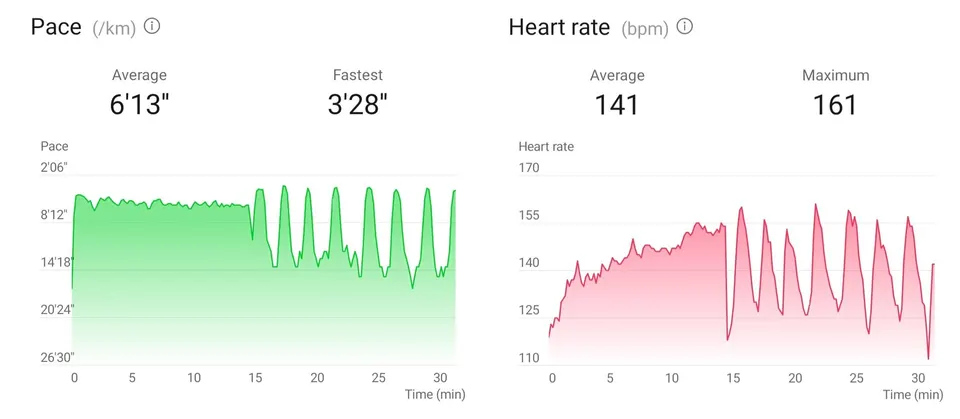
- High-intensity interval training (HIIT)
- Exercise that alternates short bursts of very hard effort with periods of rest or easier activity.
- AMPK
- An enzyme complex in cells that senses energy levels and helps adjust how fuel such as glucose is used.
- Mitochondria
- Structures inside cells that turn nutrients into usable energy.
Sources and verification
DexScience articles are produced with AI assistance and an automated fact-check against the linked sources. Spotted an error? Tell us and we will correct it openly.