Key points
- The study used observations spanning several decades from Isortuarsuup Sermia, in Southwest Greenland.
- In 2022, ice near the front surged from about 200 to about 1000 meters per year, then fell to about 50.
- The 2022 flood had a mean discharge of about 17000 cubic meters per second.
- Each flood carves a channel about 1.5 km wide beneath the ice, lowering water pressure under the glacier.
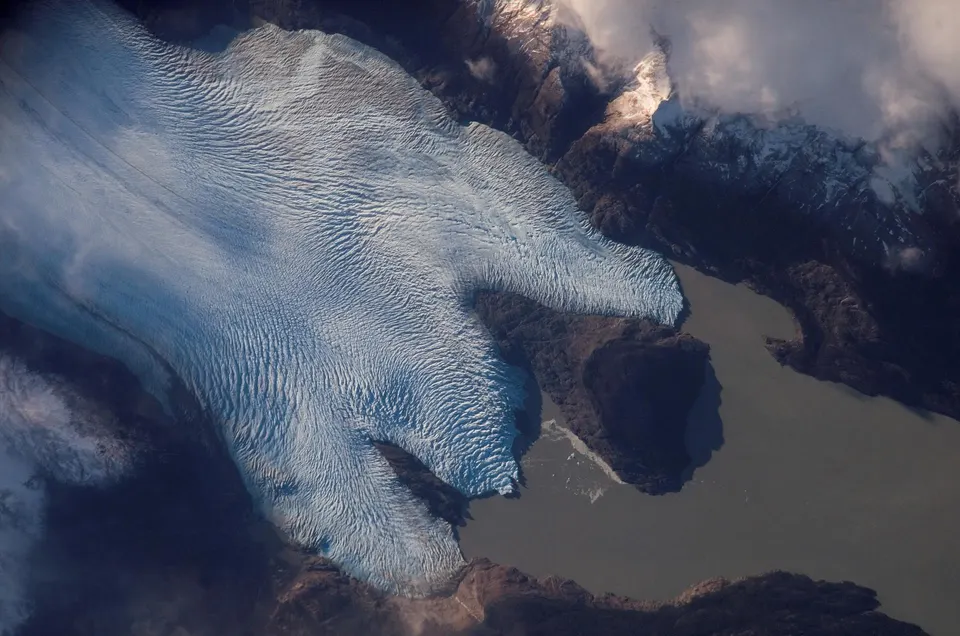
When a large lake at the edge of a Greenland glacier suddenly drains, the ice speeds up only briefly and then moves more slowly for years, a new study suggests. Drawing on several decades of observations at Isortuarsuup Sermia, in Southwest Greenland, researchers report in Nature Communications that recurring glacial lake outburst floods (GLOFs) act as a regulator on how fast the ice flows.
The glacier's speed rises and falls in a sawtooth-shaped cycle. It picks up pace over several years until a large drainage abruptly ends the acceleration, leaving the ice in a calmer, quiescent state for years afterward. The 2022 flood shows the pattern. Ice near the glacier's front jumped from a baseline of roughly 200 meters per year to about 1000 meters per year, then slowed to around 50 meters per year over the following years.
The explanation lies beneath the ice. The 2022 flood released water at an average rate of about 17000 cubic meters per second, and each flood cuts an efficient drainage channel, about 1.5 km wide, along the glacier bed. Meltwater under a glacier normally acts like a lubricant. Once that channel drains it away, water pressure drops across a broad area, the ice grips its bed more firmly, and it slides less.
Shrinking glaciers worldwide are producing more ice-marginal lakes, and those lakes are growing larger, so these floods are happening more often. As warming makes them more common, the authors argue, this self-limiting effect will act as a brake on ice movement along the edges of the Greenland Ice Sheet.
Why it matters
Greenland holds the largest volume of water in glacial lakes in the world. The study suggests that the more frequent floods expected with warming could slow ice flow at the ice sheet's margins over the longer term.
What we don't know yet
The findings come from observations of a single glacier, Isortuarsuup Sermia. The paper has been peer-reviewed and accepted, but this is an early version that may still be edited before the final version is published.
Terms in this story
- Glacial lake outburst flood (GLOF)
- A sudden release of water from a lake that is dammed by or sits beside a glacier.
- Ice-marginal lake
- A lake that forms along the edge of a glacier or ice sheet.
- Subglacial channel
- A tunnel or passage beneath a glacier that carries meltwater along the bed.
Sources and verification
DexScience articles are produced with AI assistance and an automated fact-check against the linked sources. Spotted an error? Tell us and we will correct it openly.