Key points
- The study appeared November 20, 2026, in Climate of the Past, a peer-reviewed journal published through EGU and Copernicus Publications.
- Its title asks how abruptly the Holocene Green Sahara came to an end.
- Earlier work it cites includes a 2000 study describing the African Humid Period's end as abrupt.
- Other cited work, from Lake Yoa in Chad, points to progressive drying of the Sahara over the last 6100 years.
A new paper in the peer-reviewed journal Climate of the Past takes up a long-running question about Earth's recent climate history: when the Holocene "Green Sahara" gave way to desert, did it happen suddenly or slowly? The study was published November 20, 2026, through the European Geosciences Union and Copernicus Publications. The material DexScience had for this report lists the paper's references but not its findings, so this brief covers the question and not the answer.
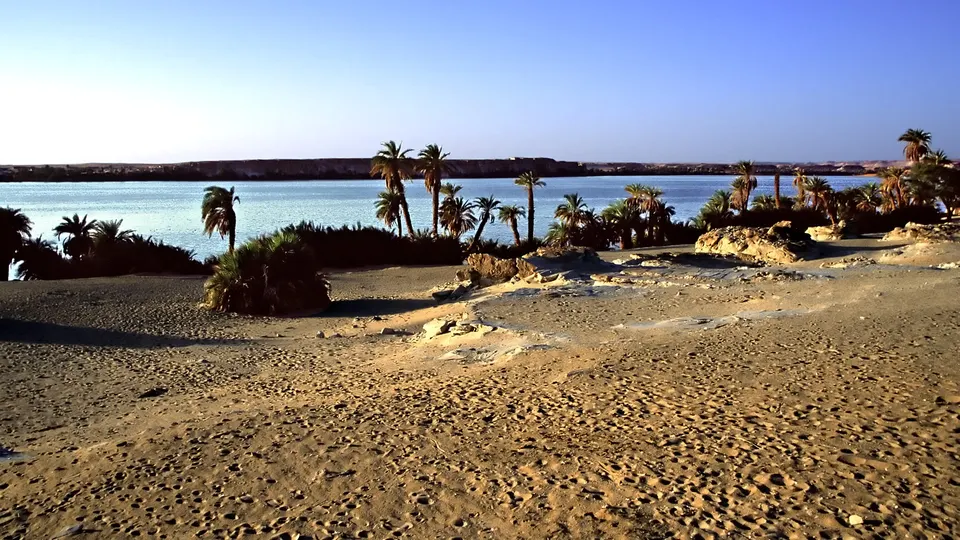
Starting late in the Pleistocene and lasting into the Holocene, the geological epoch we live in now, large stretches of today's Sahara were much wetter and held more vegetation than they do today. Scientists call this wet stretch the African Humid Period, and they still argue over how fast it ended.
The earlier research the new study cites shows why. A 2000 study in Quaternary Science Reviews described both the start and the finish of the African Humid Period as abrupt, and a 1999 modeling study simulated a sharp shift in Saharan vegetation during the Mid-Holocene. In contrast, a 2013 study of finely layered sediments from Lake Yoa in Chad pointed to progressive drying of the Sahara across the last 6100 years.
Other work in the reference list looks at possible climate tipping points in North Africa, at dust carried off northwest Africa as a clue to how the landscape changed, and at whether livestock herding may have delayed the end of the green Sahara.
Why it matters
Earlier studies cited by the paper disagree on whether the Green Sahara ended abruptly or gradually. That question bears on how sensitive North Africa's climate and vegetation are to change.
What we don't know yet
The source material available for this brief contained only the paper's reference list, not its methods or conclusions, so the study's own answer is not reported here.
Terms in this story
- Holocene
- The current geological epoch, which began at the end of the last ice age.
- African Humid Period
- A wetter phase that began in the late Pleistocene and lasted into the mid-Holocene, when much of North Africa, including parts of the Sahara, held more water and vegetation than today.
- Tipping point
- A threshold beyond which a system, such as a regional climate, shifts into a different state, sometimes quickly.
Sources and verification
DexScience articles are produced with AI assistance and an automated fact-check against the linked sources. Spotted an error? Tell us and we will correct it openly.