Key points
- Researchers analyzed more than 60,000 observations of 457 wild Indo-Pacific bottlenose dolphins collected over 40 years.
- Dolphins' average group size grew into adulthood, then shrank in later life.
- Predictability in group size rose with age, and it rose more steeply in longer-lived dolphins.
- The analysis was retrospective and did not directly test whether changes in predictability predict later survival.
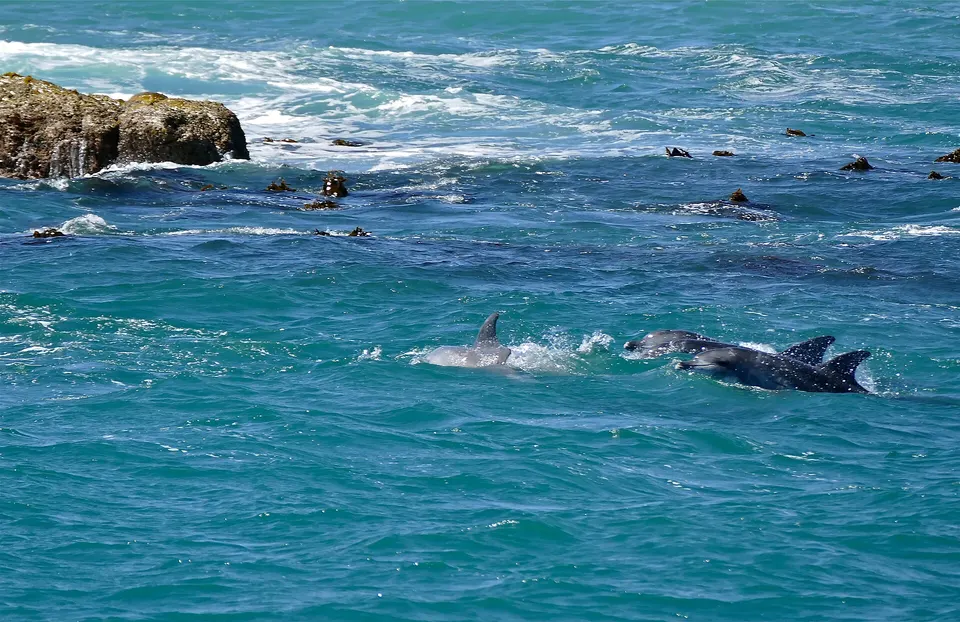
As wild Indo-Pacific bottlenose dolphins (Tursiops aduncus) get older, the size of the social groups they are found in tends to vary less. Meehan and colleagues report the finding in PLOS Biology. Their study rests on more than 60,000 observations of 457 dolphins gathered over 40 years. In a commentary in the same journal, Erin R. Siracusa says the work adds a new angle to research on how social life changes with age.
Most studies of social ageing track averages, such as whether an animal's usual number of companions shrinks over time. This team also measured predictability: how closely each dolphin's group sizes stayed near that dolphin's own typical value. On average, group size rose into adulthood and then fell. Longer-lived dolphins kept increasing their group size for longer and reached their largest groups at older ages.
Predictability went up with age. Longer-lived dolphins were more predictable overall, and their predictability increased more sharply over time. That pattern hints that the way an animal's social life ages may be linked to how long it lives. The researchers suggest that experience may teach dolphins to fine-tune their social behavior, but that idea has not yet been directly tested. Siracusa notes that physiological changes, family dynamics or the deaths of companions could also explain the trend.
She also urges caution. The team estimated each dolphin's trajectory backward from its age when it was last seen, which means the study cannot fully establish the direction of cause and effect. For dolphins still alive when the study ended, true life span is unknown.
Why it matters
Ageing may bring helpful social changes rather than only decline, according to the commentary. That idea matters for understanding late-life health, and it suggests that variability in behavior can carry meaning rather than just noise.
What we don't know yet
The analysis reconstructed each dolphin's trajectory backward from its age at last sighting, so it cannot fully establish the direction of causality between changes in predictability and survival. Life spans are also unknown for dolphins still alive. Future studies would need to model predictability and survival together, following dolphins forward in time.
Terms in this story
- Social ageing
- Changes in an animal's social behavior and connections that happen as it grows older.
- Predictability
- How consistently an individual behaves compared with its own average; less variation means more predictable.
- Senescence
- The gradual decline in body function with age that makes an organism more vulnerable to disease and death.
Sources and verification
DexScience articles are produced with AI assistance and an automated fact-check against the linked sources. Spotted an error? Tell us and we will correct it openly.