Key points
- A subzone of Wernicke's area, the left posterior superior temporal gyrus (lpSTG), becomes active before a person speaks.
- The researchers report that this subzone is causally necessary for producing speech.
- Its activity reflects features of whole upcoming words, not low-level sounds or articulatory details.
- Signals from the lpSTG could decode intended speech in people with paralysis, according to the study in Science.
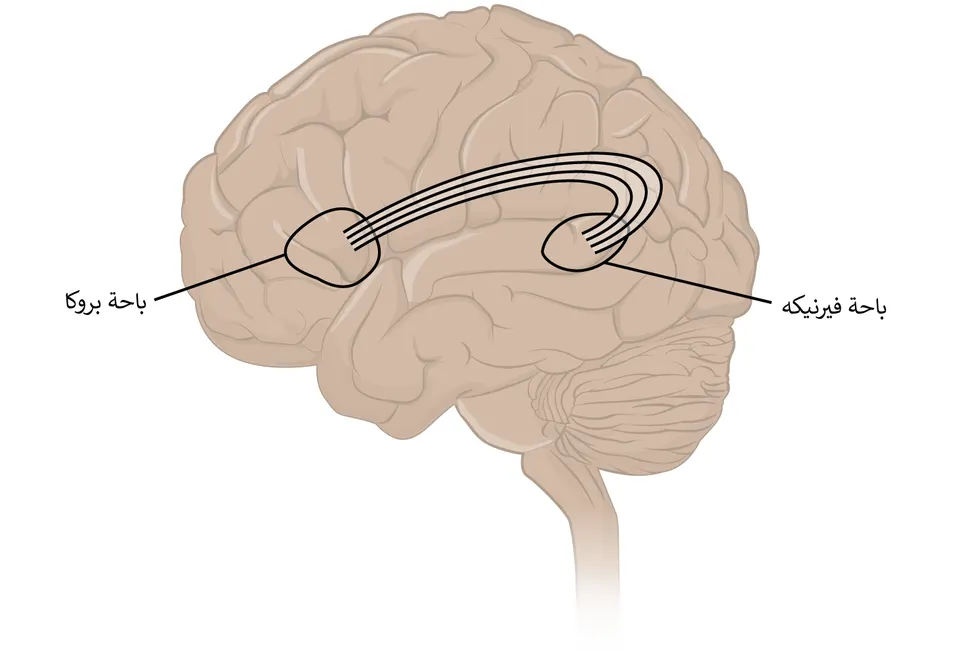
Wernicke's area is best known as the part of the brain that helps us understand what we hear. A new study published in Science finds that a discrete subregion inside it does something else as well: it helps generate speech, encoding the words a person is about to say. Using recordings taken directly from human brains, the researchers identified a subzone that switches on ahead of speech and carries information about upcoming words.
The finding takes on a long-standing puzzle. Wernicke's area sits in the posterior temporal lobe, and textbooks define it mainly by its role in comprehension. But damage to this area also severely disrupts a person's ability to speak, which is hard to explain if the region only handles incoming sound.
To work out what is going on, the team combined three kinds of evidence. They recorded electrical activity directly from the brain, used cortical stimulation to probe what happens when specific spots are perturbed, and analyzed lesions, meaning areas of brain damage, to see which injuries affect speech. Cortical stimulation applies small electrical currents to the surface of the brain, which can briefly interfere with what the targeted tissue normally does.
Together, these approaches pointed to one discrete subzone: the left posterior superior temporal gyrus, or lpSTG. The researchers report that this subzone becomes active before speech begins and that it is causally necessary for speaking, not just involved alongside it. Its activity, they found, tracks properties of entire upcoming words. It does not mainly reflect basic acoustic features or the details of how the mouth and tongue form sounds.
The team also separated this activity from a nearby signal that might be confused with it. When people talk, they hear their own voice, and neighboring auditory tissue responds to that feedback. According to the study, the lpSTG's word-related activity is distinct from those feedback responses, suggesting the region is preparing speech rather than simply listening to it.
The work also has a practical side. The researchers report that activity from the lpSTG could be used to decode intended speech in people with paralysis. That points to the region as a possible source of signals for technology that aims to restore communication.
The authors stop short of recasting Wernicke's area entirely. They conclude that it remains a key part of the auditory cortex, but that it contains a dedicated subregion devoted to generating speech. That conclusion offers an answer to the puzzle the team set out to address.
Why it matters
The study helps resolve why damage to a region known for comprehension also impairs speaking, and it identifies brain activity that could decode intended speech in people with paralysis.
Terms in this story
- Wernicke's area
- A region in the posterior temporal lobe of the brain traditionally linked to understanding spoken language.
- Cortical stimulation
- A technique that delivers small electrical currents to the brain's surface to test what a specific area does.
- Lesion analysis
- The study of brain damage in people to learn which regions are needed for particular abilities.
Sources and verification
DexScience articles are produced with AI assistance and an automated fact-check against the linked sources. Spotted an error? Tell us and we will correct it openly.