Key points
- Researchers used DNA Typewriter to record cell lineage in a mouse over nearly 2 weeks of development.
- From one embryo, they rebuilt a time-calibrated family tree of 1.28 million cells rooted at the zygote.
- A burst of DNA editing clearly marked the two daughter cells of the first division, which served as built-in replicates.
- Closely related cells shared a cell type far more often than chance would predict.
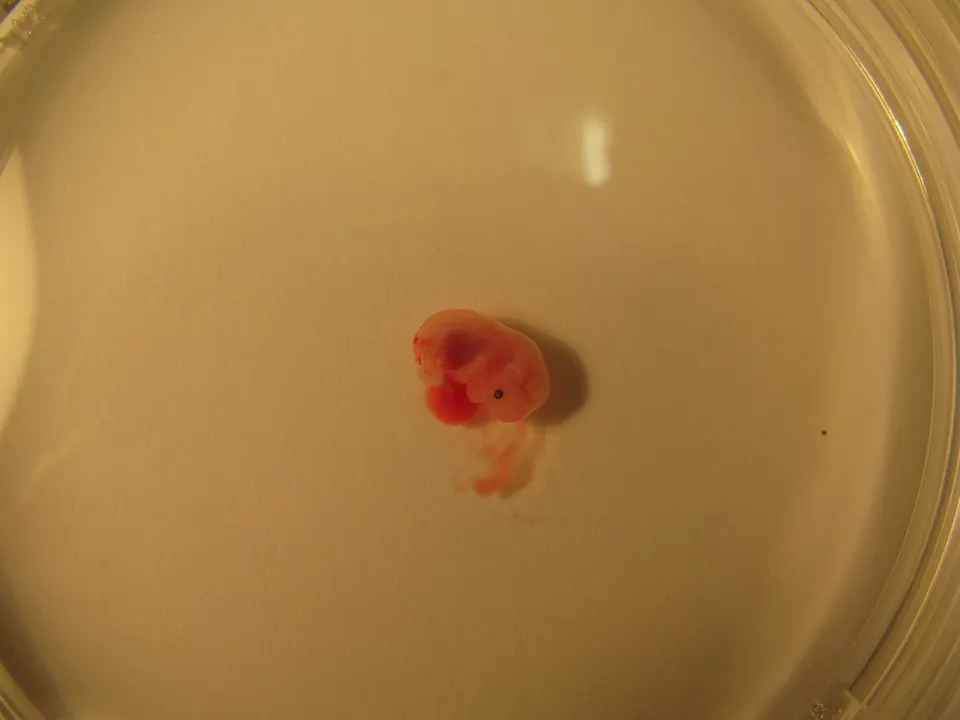
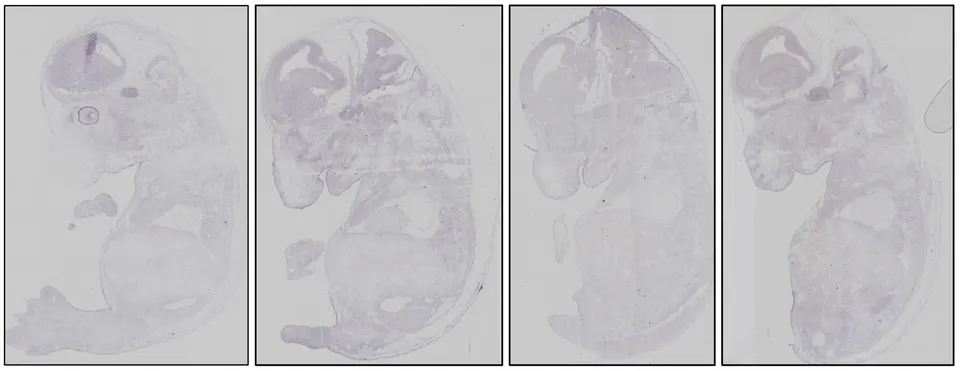
Researchers have followed the family history of cells in a mouse embryo for nearly 2 weeks of development. Their record runs from the zygote, the single fertilized egg cell, to late organogenesis, when the body's organs are taking shape. They did it with a sequential molecular recorder called DNA Typewriter. Reporting in the journal Science, the team describes rebuilding a lineage tree for 1.28 million cells, all taken from one embryo.
Mammalian development is hard to watch, the researchers point out, because it takes place inside tissues and organs that neither our eyes nor our instruments can see into. A recorder gets around that problem by storing events in the cells' own DNA as development proceeds. That record can then be read back later. For each of the 1.28 million cells, the team also measured gene activity, which shows what kind of cell it had become.
The resulting tree has three notable features. It is rooted at the zygote. It is time-calibrated, so its branch points can be assigned approximate dates. And it is supported by parsimony, a standard way of choosing the family tree that explains the data with the fewest changes. The very first cell division turned out to be especially easy to spot. A burst of editing marked its two daughter cells without ambiguity, according to the authors, so each daughter's descendants could serve as a built-in replicate, a bit like running the same experiment twice inside one animal.
With the tree in hand, the team measured clonal dominance, meaning that some lineages ended up contributing more than their share of cells. They traced this imbalance to gastrulation, the early stage when the embryo reorganizes into the basic layers that later give rise to the body's tissues.
The tree also lines up with cell identity. Cells sitting next to each other on the tree, as siblings, belonged to the same cell type far more often than chance would predict. Where siblings differed in type, the researchers say, those splits flag the final steps of differentiation, the process by which cells take on specialized roles.
The researchers also asked which cell types tend to appear within the same branches of the tree, and how that changes over time. From this they pieced together a dated hierarchy showing how closely different cell types are linked through shared ancestry. They also estimated the likely identities of ancestral cells at the tree's inner branch points. Those estimates retraced routes between cell states that biologists already knew about, which is a useful check that the method gives sensible answers.
The authors describe a lineage-anchored account of mammalian development, one grounded in how cells descend from their ancestors, as something long out of reach. With this work, they write, such an account is now coming into view.
Why it matters
The authors describe a lineage-anchored picture of how a mammal develops as long out of reach. This work shows that such a record can be reconstructed for more than a million cells from a single mouse embryo, tracing them back to the fertilized egg.
What we don't know yet
The reconstruction comes from a single mouse embryo and covers development up to late organogenesis. The authors present it as bringing a full lineage picture into view, not as completing one.
Terms in this story
- Cell lineage
- The family history of a cell, tracing which earlier cells it descended from through successive divisions.
- Parsimony
- A method for building family trees that favors the tree requiring the fewest changes to explain the data.
- Gastrulation
- An early stage of embryo development when cells reorganize into the basic layers that later form the body's tissues.
Sources and verification
DexScience articles are produced with AI assistance and an automated fact-check against the linked sources. Spotted an error? Tell us and we will correct it openly.