Key points
- A wild strawberry produced double the buds, flowers and fruit of NASA's pick 'Delizz', but grew too many runners.
- Cucumbers tested under spaceflight conditions kept yielding edible fruit despite some enlarged leaves, a HortScience study reports.
- Lemon basil passed preliminary screening at Kennedy Space Center and completed seed sanitization.
- A prototype growth chamber from NASA's Biological and Physical Sciences Division is set to launch to the space station.
According to NASA, recent tests point to strawberries, cucumbers and lemon basil as possible sources of fresh food for astronauts on future Moon and Mars missions. The agency highlighted the results during Thanksgiving week. It notes that besides adding nutrition and variety, crops grown in space can take up carbon dioxide, release oxygen and help recycle water.
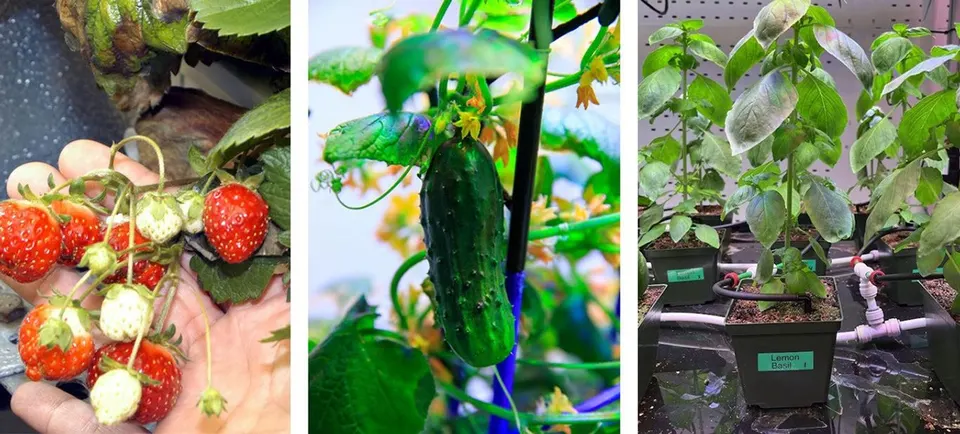
To test strawberries, researchers at NASA's Kennedy Space Center in Florida, the University of Melbourne and the University of Western Australia compared a wild strawberry with NASA's leading candidate, a variety called 'Delizz', under simulated space conditions. Their study appeared in September in Life Sciences in Space Research. Grown from seed, the wild plant produced double the buds, flowers and fruit, though its berries were small and yellow. It also sent out too many runners, the creeping stems that would crowd a spacecraft, so Delizz and its large red fruit kept the lead.
In a study published in August in HortScience, NASA-funded researchers report that cucumbers grown under spaceflight conditions developed somewhat enlarged leaves but kept producing edible fruit at a steady pace. According to NASA, no crop from the gourd family has yet been grown in space. Lemon basil, an herb that smells and tastes like citrus, passed its first round of screening at Kennedy. It also came through seed sanitization, a required step that removes microbes from seeds before flight.
The basil will next be grown in plant pillows, the containers used to raise plants aboard the International Space Station. Separately, NASA's Biological and Physical Sciences Division is preparing to send a prototype growth chamber to the station. The agency says it will help guide crop-growing systems for Mars missions and future Moon Base habitats.
Why it matters
NASA says a wider range of crops supports astronauts' diets and mental well-being, and the added plant diversity can improve the odds of successful harvests on long missions. Plants can also help recycle air and water far from Earth.
What we don't know yet
These are early results. The strawberry and cucumber tests used simulated or spaceflight-like conditions, and lemon basil still has to be tested in plant pillows used aboard the space station.
Terms in this story
- Runners
- Long stems that some plants, including strawberries, send out sideways to start new plants.
- Seed sanitization
- A cleaning process that removes microorganisms from seeds before they are flown to space.
- Plant pillows
- Small growth containers that hold plants aboard the International Space Station.
Sources and verification
DexScience articles are produced with AI assistance and an automated fact-check against the linked sources. Spotted an error? Tell us and we will correct it openly.