Key points
- The FDA approved Welgemda (ribitol) on November 23, 2026, for adults and children weighing at least 30 kg.
- The FDA says no earlier therapy had won approval for any type of limb-girdle muscular dystrophy.
- In a trial of 112 patients, the drug group did better than placebo on walking speed and lung function after 12 months.
- The most common side effects were gastrointestinal problems, such as diarrhea and stomach pain, and joint pain.
The U.S. Food and Drug Administration has approved Welgemda (ribitol) for limb-girdle muscular dystrophy type 2I/R9, a rare inherited muscle disease. The agency announced the decision on November 23, 2026. According to the FDA, no therapy had previously been cleared for any type of limb-girdle muscular dystrophy, which makes Welgemda the first. The approval covers adults and children who weigh at least 30 kg.
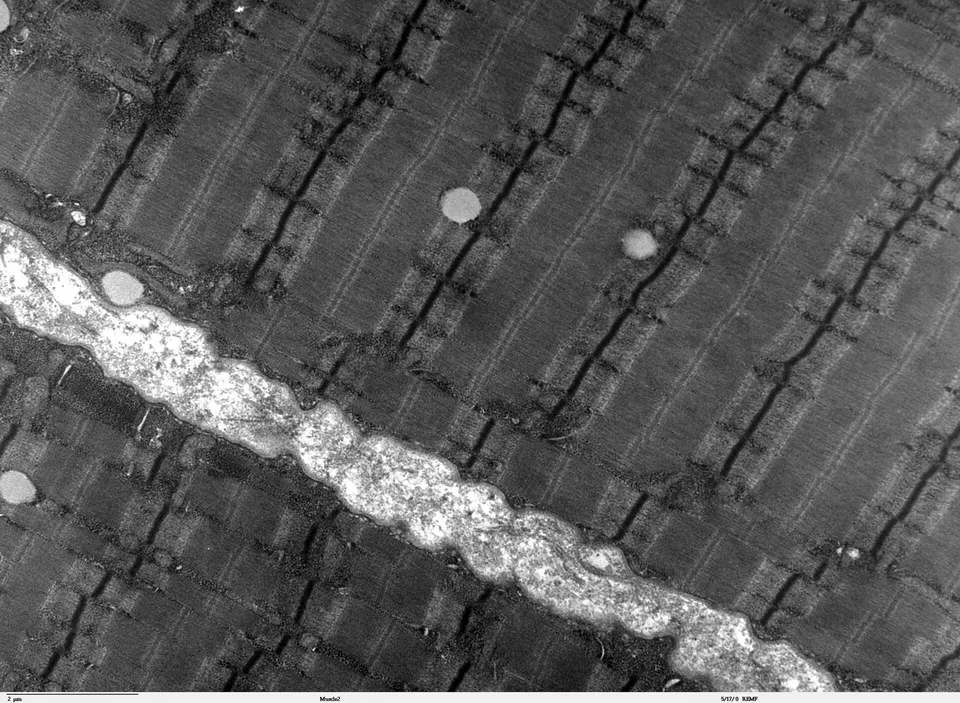
The disease is caused by mutations in the FKRP gene. Normally, the enzyme made from this gene attaches sugar molecules to alpha-dystroglycan, a protein that anchors muscle cells to the tissue around them. When that step fails, muscle cells become fragile and break down. Patients develop weakness that gets worse over time and have trouble walking, and many also have breathing problems. Symptoms usually start in childhood or early adulthood.
The approval is based on a randomized, double-blind trial of 112 people whose diagnosis had been confirmed by genetic testing. Each participant received either Welgemda or a placebo, a dummy treatment, for up to 36 months. The FDA says that at a planned interim analysis after 12 months, the treated group showed significant gains over the placebo group in two measures: walking speed on a 100-meter timed test, and forced vital capacity, a measure of lung function. Levels of sugar-tagged alpha-dystroglycan also rose, which suggests the drug was reaching its target.
Exactly how Welgemda works is not fully known. The agency says it may boost matriglycan, a naturally occurring sugar that holds alpha-dystroglycan in place within muscle. Patients take the drug by mouth twice a day, mixed with water. The most common side effects were gastrointestinal problems, such as diarrhea and stomach pain, and joint pain. ML Bio Solutions Inc. makes the drug, and BridgeBio Pharma, Inc. distributes it.
Why it matters
According to the FDA, no therapy had been approved for any type of limb-girdle muscular dystrophy before Welgemda. The agency says the trial data point to meaningful gains in how fast patients walk and how well their lungs work.
What we don't know yet
The approval relies on a planned interim analysis after 12 months of a trial that runs for up to 36 months. The FDA also says the drug's precise mechanism is not fully known.
Terms in this story
- Alpha-dystroglycan
- A muscle protein that works like an anchor, linking muscle cells to the tissue around them.
- Forced vital capacity
- The amount of air a person can forcefully breathe out after a deep breath. It is used to gauge lung and breathing-muscle health.
- Placebo-controlled, double-blind trial
- A study in which some participants get a dummy treatment for comparison and neither patients nor researchers know who received what.
Sources and verification
DexScience articles are produced with AI assistance and an automated fact-check against the linked sources. Spotted an error? Tell us and we will correct it openly.