Key points
- Researchers built an antigen-restricted viral outgrowth assay to test whether specific antigens can reactivate latent HIV.
- *Candida albicans* stimulation drew infectious virus from a provirus in a pericentromeric region in one participant on ART.
- In an elite controller, an HIV-1 Gag peptide outperformed broad stimulation roughly tenfold at a ZNF721-integrated provirus.
- The study used cells from only two people with HIV and was conducted outside the body.
Some HIV hiding in parts of the genome thought to keep it silent can still be woken up by the immune system's routine work, according to a study published November 23 in PLOS Pathogens. Working with blood cells in the lab, Angelica Camilo-Contreras and colleagues showed that exposing infected cells to a specific antigen — a molecule that a T cell is tuned to recognize — was enough to coax out replication-competent virus from proviruses sitting in repressive stretches of DNA.
HIV persists during antiretroviral therapy (ART) because its genetic material integrates into the chromosomes of long-lived immune cells as a provirus. Over years of treatment, intact proviruses become concentrated in genomic neighborhoods that are unfriendly to gene expression, which has led researchers to assume many of them are effectively inert. To test that, the team built what they call an antigen-restricted quantitative viral outgrowth assay, which pairs exposure to a chosen antigen with a measurement of how much infectious virus emerges.
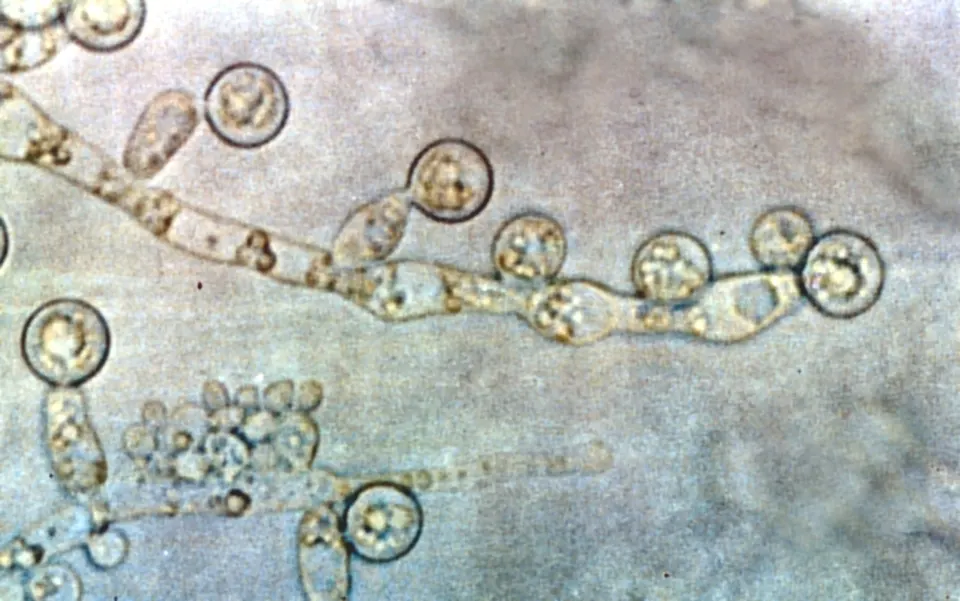
They studied cells from two people with HIV: one on long-term ART and one elite controller, meaning someone who suppresses the virus without medication. Stimulation with the common yeast Candida albicans selectively drew out virus from an intact provirus lodged in a pericentromeric transition region near a chromosome's center; sequences matching it also turned up in low-level plasma virus during treatment. In the elite controller, an HIV-1 Gag peptide pulled virus from a provirus embedded in the zinc finger gene ZNF721, and did so roughly tenfold more efficiently than standard broad immune stimulation.
The researchers say the results indicate that a provirus's genomic address can restrict reactivation without preventing it, and that everyday antigen encounters may help sustain residual virus or seed rebound if treatment stops.
Why it matters
Efforts to cure HIV depend on knowing which hidden proviruses can restart infection; the findings suggest that ones considered deeply latent may still respond to ordinary immune triggers and contribute to persistent low-level virus or rebound after treatment stops.
What we don't know yet
The work was done on cells outside the body and involved just two people with HIV, one on long-term ART and one elite controller, so it does not show how often such reactivation happens in people.
Terms in this story
- Provirus
- A copy of HIV's genetic material that has been inserted into the DNA of an infected cell.
- Elite controller
- A person who keeps HIV suppressed without taking antiretroviral therapy.
- Cognate antigen
- The specific molecule that a given immune cell's receptor is built to recognize and respond to.
Sources and verification
- Cognate antigen recognition induces HIV-1 outgrowth from proviruses in repressive chromatin contexts
DexScience articles are produced with AI assistance and an automated fact-check against the linked sources. Spotted an error? Tell us and we will correct it openly.