Key points
- The study followed six grain and forage cropping systems typical of the US Midwest for 30 years.
- In most systems, nitrogen removed in harvests roughly matched total nitrogen inputs.
- Soil nitrogen stocks fell over 30 years in most systems, which fed disproportionately into environmental losses.
- Maize-soybean rotations got less fertilizer but had significantly higher nitrogen losses than the other systems.
Nitrogen escaping from farm fields pollutes water and air and threatens wildlife, and people often blame it on heavy use of fertilizer and manure. A 30-year field experiment in the US Midwest suggests that another source matters a great deal: the slow breakdown of soil organic matter. The study appears in a peer-reviewed journal from IOP Publishing.
Soil organic matter, the carbon-rich remains of plants and microbes, holds more nitrogen than any other pool on a farm. Even so, how much it adds to nitrogen pollution has been poorly measured. The researchers tracked nitrogen inputs, the nitrogen carried away in harvested crops, and soil nitrogen stocks across six grain and forage cropping systems typical of the region.
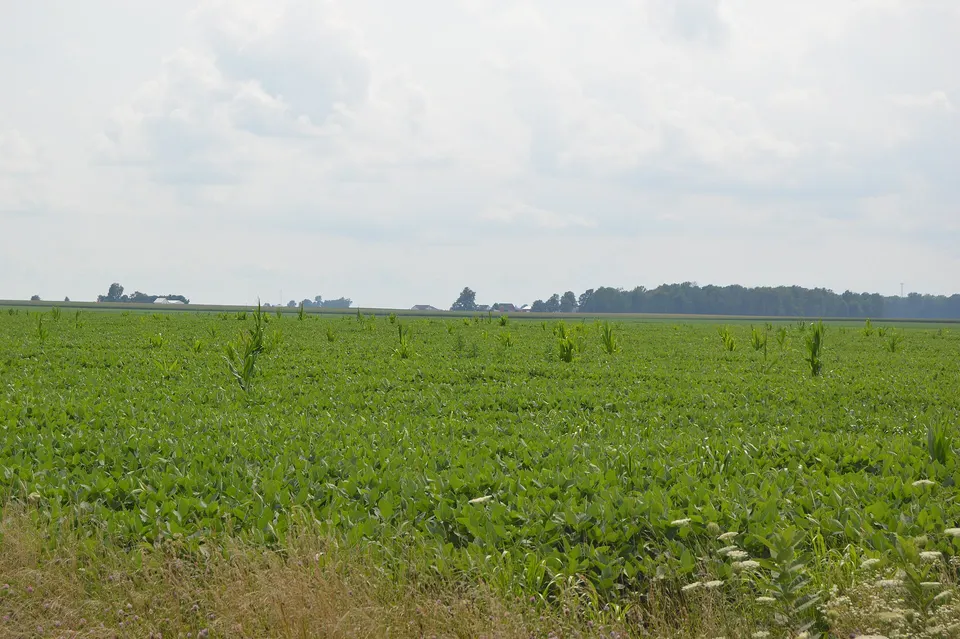
In most systems, harvests removed about as much nitrogen as the total nitrogen inputs, a sign that the inputs were used fairly efficiently. Yet soil nitrogen stocks dropped over the three decades in most systems. Nitrogen freed as organic matter decomposed made up an outsized share of what was lost to the environment. Rotations of maize (Zea mays) and soybean (Glycine max) received less fertilizer but leaked significantly more nitrogen than the other systems, because they lost more from their soil organic matter.
The authors conclude that careful fertilizer and manure management is needed but not enough on its own to cut nitrogen losses from intensive farming. They argue for practices that maintain or build soil organic matter, and for policies that support those practices.
Why it matters
The results suggest that managing fertilizer and manure alone may not stop nitrogen pollution from intensive farms. Protecting soil organic matter may also be needed.
What we don't know yet
The findings come from a single long-term experiment in the US Midwest, and the study summary does not say how well they apply to other regions or farming systems.
Terms in this story
- Soil organic matter
- The decomposing remains of plants, animals and microbes in soil, which store large amounts of carbon and nitrogen.
- Crop rotation
- Growing different crops in turn on the same field across seasons or years.
Sources and verification
DexScience articles are produced with AI assistance and an automated fact-check against the linked sources. Spotted an error? Tell us and we will correct it openly.