Key points
- Method couples N- and C-unprotected amino acids without isolating intermediates, running N-to-C like the ribosome.
- Reported average yield of at least 95% per coupling and epimerization of 1.0% or less.
- Authors report roughly tenfold fewer isolations and up to about a hundredfold less waste.
- Demonstrations included degarelix, semaglutide and a tirzepatide heptapeptide fragment.
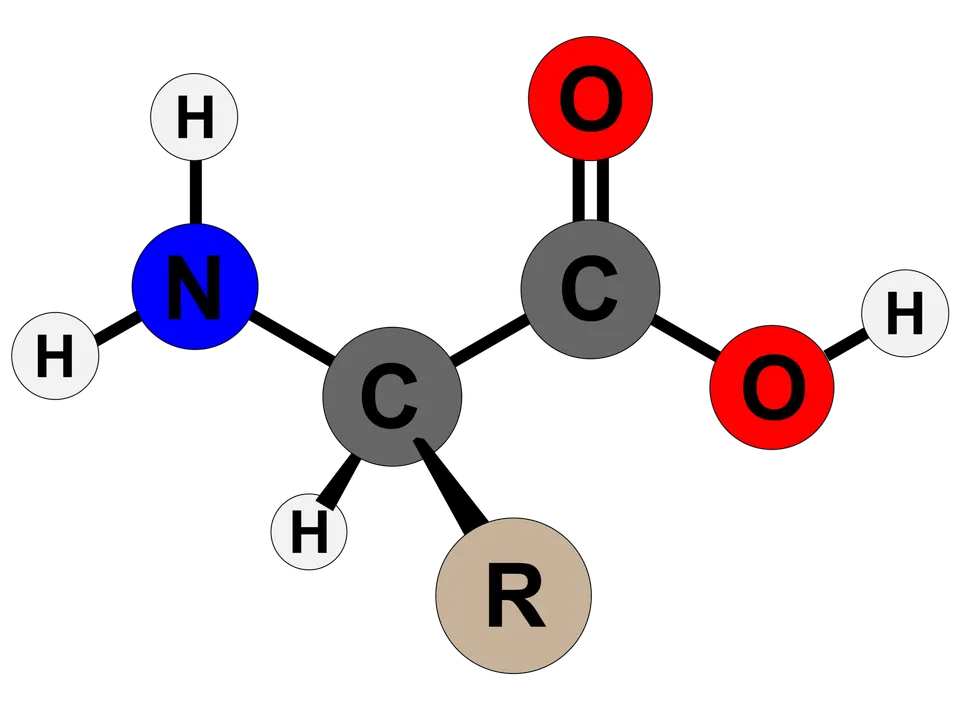
Peptide drugs are built from chains of amino acids, and the way chemists assemble them has long run opposite to the way cells do it. Standard chemical synthesis adds amino acids from the C-terminus toward the N-terminus and relies on protecting groups, temporary chemical caps that keep reactive ends out of trouble. A team reporting in Nature describes a method that runs in the other direction, N-to-C, the same direction as the ribosome, and uses amino acids with neither end protected.
The authors, including Jingjun Yin and Louis-Charles Campeau, call the approach continuous N-to-C peptide synthesis, or NCPS. Couplings proceed one after another without isolating the intermediates in between. They report an average yield of 95% or better per coupling and epimerization — unwanted scrambling of an amino acid's three-dimensional handedness — held to 1.0% or less. Seven couplings were run back to back, and longer chains were assembled by joining preformed fragments while preserving chiral integrity.
According to the researchers, the method works with all 20 canonical amino acids and with a broad set of non-canonical ones that medicinal chemists use to tune drug-like properties. Because the starting materials need no protection at either end, assembly requires fewer isolation steps than it takes just to prepare the Fmoc-protected building blocks that conventional synthesis begins with. The team puts the reduction at roughly tenfold fewer isolations and up to about a hundredfold less waste. They also built a flow synthesizer, which pumps reagents through tubing rather than working batch by batch, to raise speed and output.
As demonstrations, the group made a seven-residue fragment of tirzepatide, the drug degarelix, a 14-residue engineered macrocyclic peptide, and semaglutide. The authors conclude that the approach could reshape how peptides are manufactured.
Why it matters
The authors note that demand for peptide therapeutics is growing rapidly and that current synthesis methods strain efficiency and sustainability; a route that starts from amino acids unprotected at both ends and skips most isolation steps could cut the waste and effort behind these medicines.
What we don't know yet
The paper is an early, citable version that may be further edited before the final version of record. The longest reported run of consecutive couplings was seven, with longer peptides assembled by joining fragments; the authors describe potential for manufacturing rather than demonstrated industrial-scale production.
Terms in this story
- Protecting group
- A temporary chemical cap placed on a reactive part of a molecule so that a reaction happens only where the chemist intends.
- Epimerization
- Unwanted flipping of an amino acid's three-dimensional handedness, which can change a peptide's shape and activity.
- Flow synthesis
- Chemistry run by pumping reagents continuously through tubing or channels instead of mixing them in a vessel one batch at a time.
Sources and verification
DexScience articles are produced with AI assistance and an automated fact-check against the linked sources. Spotted an error? Tell us and we will correct it openly.