Key points
- TangiMap uses an AI agent to assign digital functions to the physical controls on everyday devices.
- The agent gathers context from a program's API, an MCP server, or a screenshot read by a vision-language model.
- Demos covered Adobe Lightroom, sound-mixing software, Blender and Adobe's Character Animator.
- The team built a custom interface for each application, and Zhu hopes to run a user study to gather feedback.
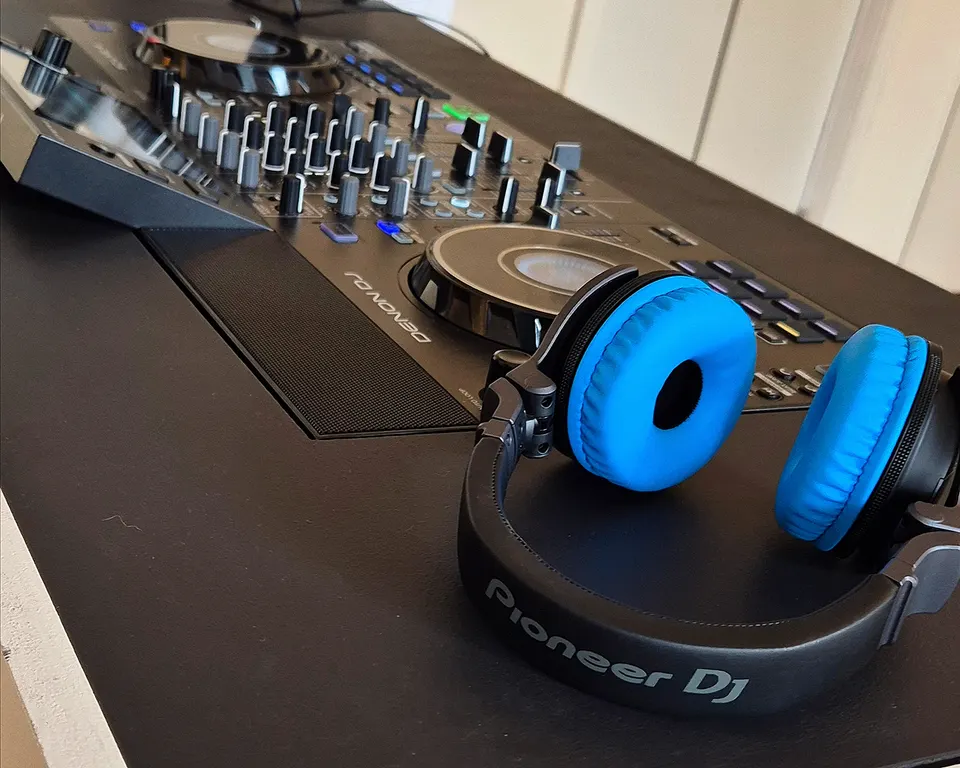
Researchers have built TangiMap, a system in which an AI agent decides what the knobs, faders and buttons on ordinary hardware controllers should do inside a given piece of software. It was developed by Yunyi Zhu, a doctoral student in the MIT Department of Electrical Engineering and Computer Science and a CSAIL researcher, and Chang Xiao, an assistant professor at Boston University. According to an MIT press release, the pair presented the tool earlier this month at the ACM Symposium on User Interface Software and Technology.
To work out each control's job, the agent collects information about the program, the user's habits and the device. It can read the program's API, which is the set of rules that lets programs exchange information. It can also query an MCP server or have a vision-language model interpret a screenshot. A large language model then gathers all of this into a file before the functions are assigned to the controls.
In demonstrations, the team turned a standard mixer into a color-adjusting controller for Adobe Lightroom and set up sound-mixing software so performers could adjust their music live. A simpler mixer changed properties such as shininess on models generated in Blender. A control pad let users puppeteer a cartoon character in Adobe's Character Animator. Zhu says physical controls make it possible to work without looking and to change several settings at the same time.
The work is still at an early stage. The researchers created a custom interface for each application, and they hope designers will eventually be able to generate one from a photo. Zhu hopes to run a user study to find out whether the approach actually improves these tasks. The team also wants the system to account for ergonomics and hand position.
Why it matters
The researchers argue that physical controls allow eyes-free, multi-setting adjustments that screens make difficult, and TangiMap aims to make those controls adaptable rather than fixed to one function.
What we don't know yet
Zhu hopes to run a user study to learn whether the approach improves these experiences. The team created a custom interface for each application and wants the system to better account for ergonomics and how users position their hands.
Terms in this story
- API
- A set of rules that lets one software program talk to and control another.
- MCP server
- A program that uses the Model Context Protocol, an open standard, to make an app's data and functions available to AI agents.
- Vision-language model
- An AI model that can interpret images, such as screenshots, and describe them in text.
Sources and verification
DexScience articles are produced with AI assistance and an automated fact-check against the linked sources. Spotted an error? Tell us and we will correct it openly.